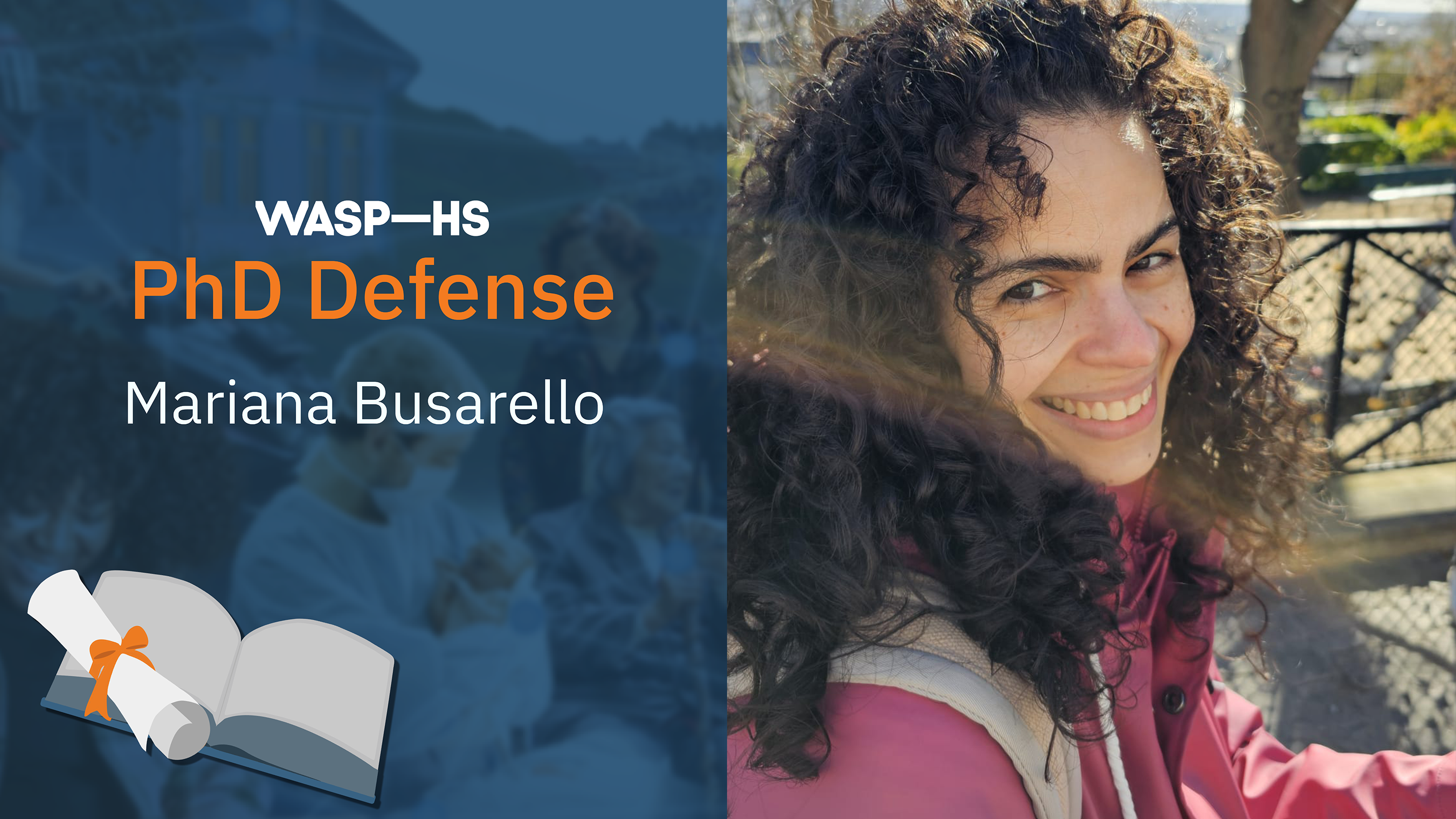
Mariana Busarello defends her doctoral thesis “Mapping small water channels using machine learning” on December 5 at Swedish University of Agricultural Sciences.
Abstract
Boreal landscapes are shaped by a dense network of natural streams, modified streams, and ditches. Together, they regulate hydrology, nutrient transport, and ecosystem function. Historically, streams were modified to accommodate log transportation, and drainage ditches were dug to improve food and timber production. Although new ditching has mostly stopped, historical changes to the drainage network still affect forestry and water management. Small streams and ditches are the landscape’s capillaries, but they remain poorly mapped despite their vital hydrological and ecological roles. This thesis addresses this gap in knowledge by developing a novel, national-scale framework for mapping small streams and ditches using high-resolution topographic data and machine learning techniques. Combining convolutional neural networks, XGBoost classification, uncertainty quantification, and drainage analyses, this work identifies geomorphological and hydrological indices that distinguish streams from ditches across the landscape. The highest-performing model shows that integrating digital elevation models with terrain indices and machine learning delineates the channel networks successfully for ditches (recall=76%, precision=88%) and moderately for natural streams (recall=58%, precision=56%). Furthermore, the produced uncertainty maps highlight low-certainty pixels from the background that can be used to potentially improve the mapping of streams in the future. To the best of our knowledge, this is the first study that can separate streams and ditches on maps across an entire nation. By providing consistent, scalable maps of small channels, this research supports restoration prioritization, sustainable forestry planning, and national reporting under EU and UN environmental frameworks. The methodology also offers a reproducible approach for characterizing coupled natural-artificial drainage systems in boreal and temperate regions worldwide.
Supervisor
William Lidberg, Swedish University of Agricultural Sciences
Opponent
Chris Soulsby, University of Aberdeen