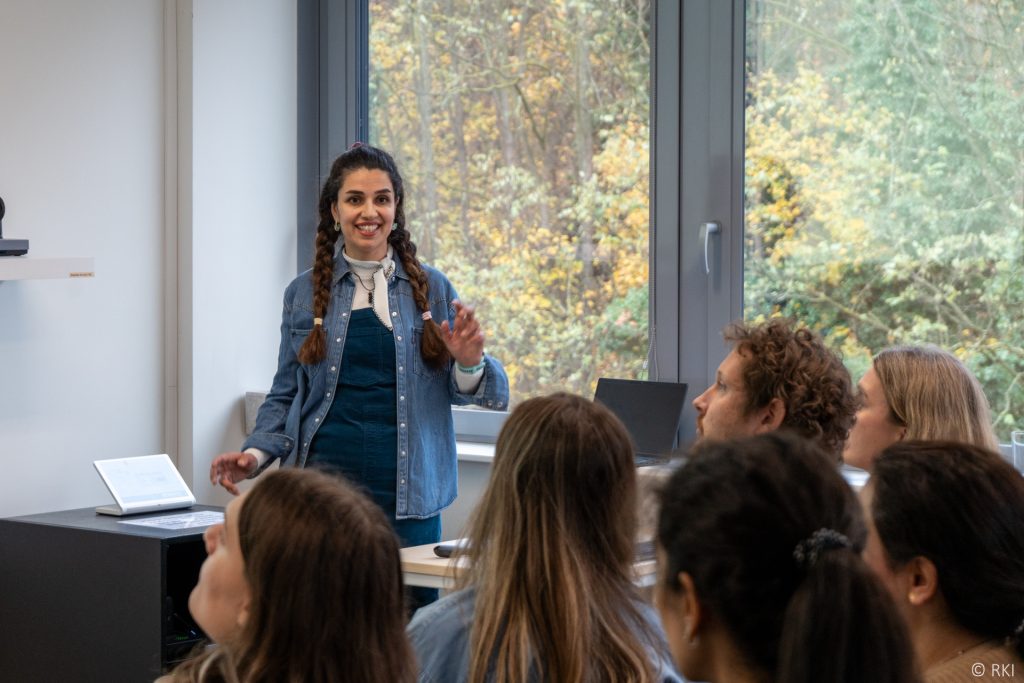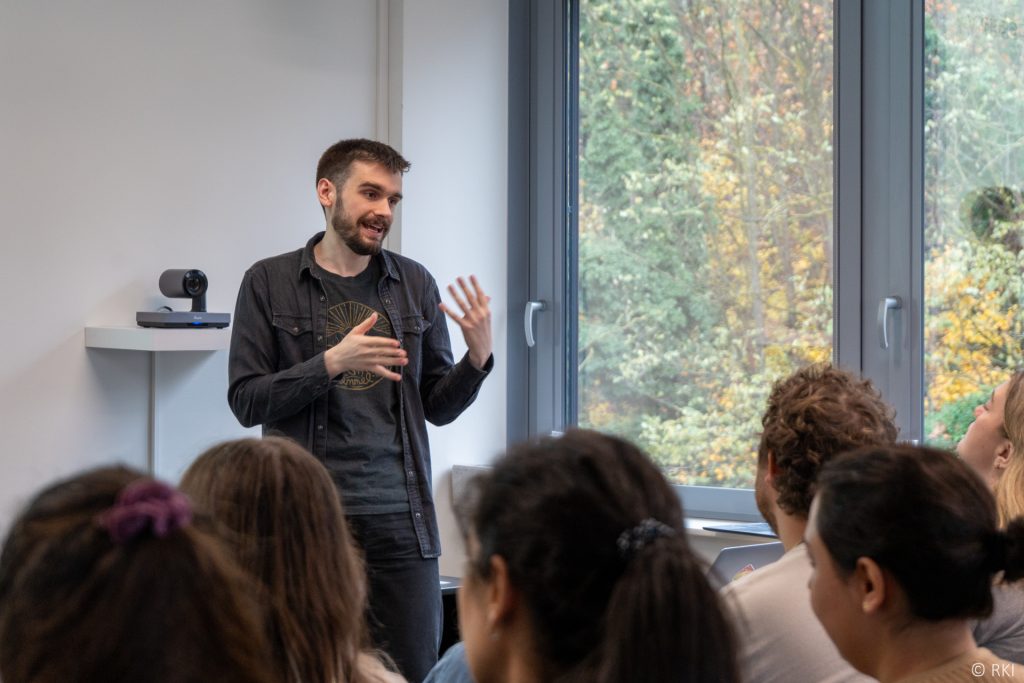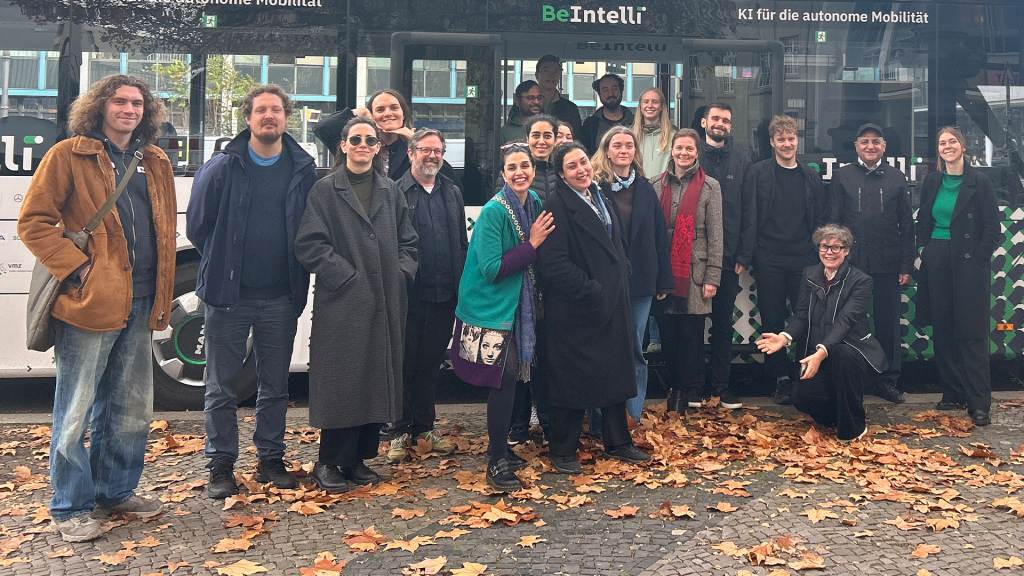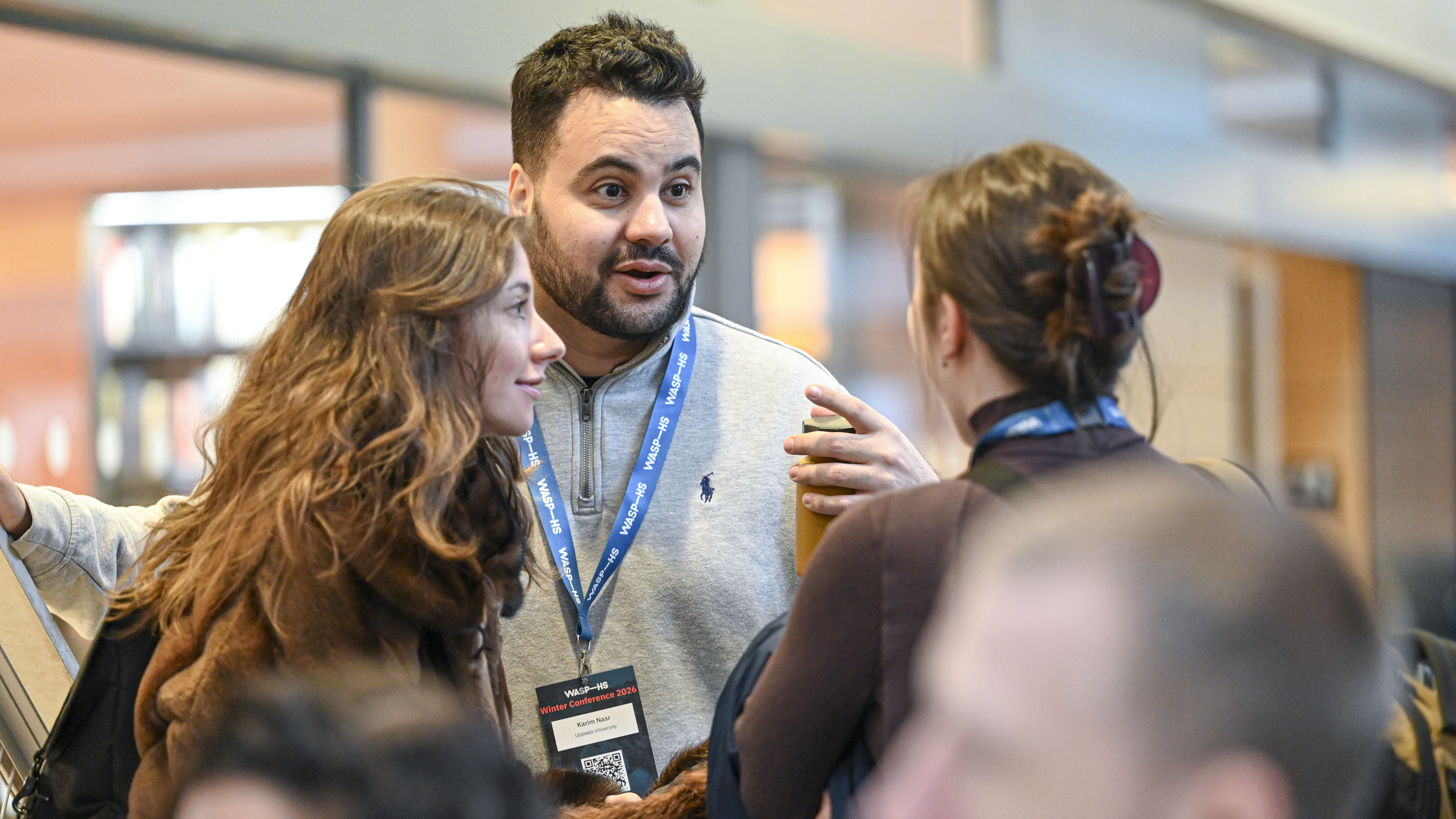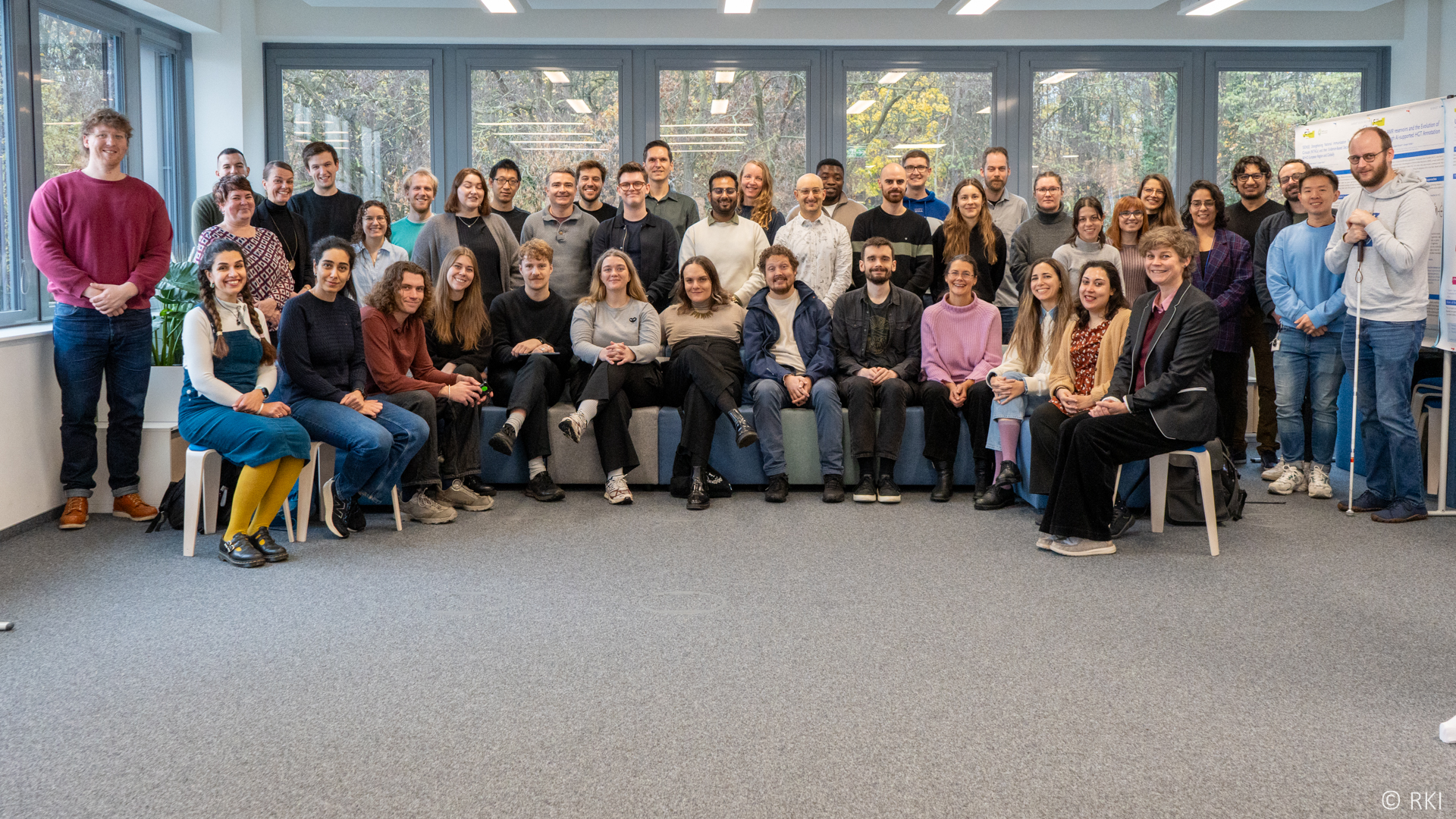
Berlin is a hub of ideas and inspiration that 15 WASP-HS PhD students explored when vising the city’s research and innovation landscape. On November 10–12, the WASP-HS Graduate School organized a three-day study visit that brought together research environments, tech developers, and art curators.
“Study visits offer fantastic opportunities for exchange. Not only for our junior scholars, who gain valuable insights and build new connections, but also for the companies and institutes we visit. Knowledge sharing truly goes both ways,” says Ericka Johnson, Professor of Gender and Society at Linköping University and WASP-HS Graduate School Director. “We found many shared interests, not least with colleagues who are also working with interdisciplinary approaches to the AI and society entanglement.”
Networking plays a vital role in every PhD journey, offering opportunities to exchange ideas, build collaborations, and gain valuable perspectives within and beyond academia. To make these connections and provide insights into new academic environments and companies, the WASP-HS Graduate School organized a study visit to Berlin on November 10–12, 2025.
From Research Environments to Art Exhibitions
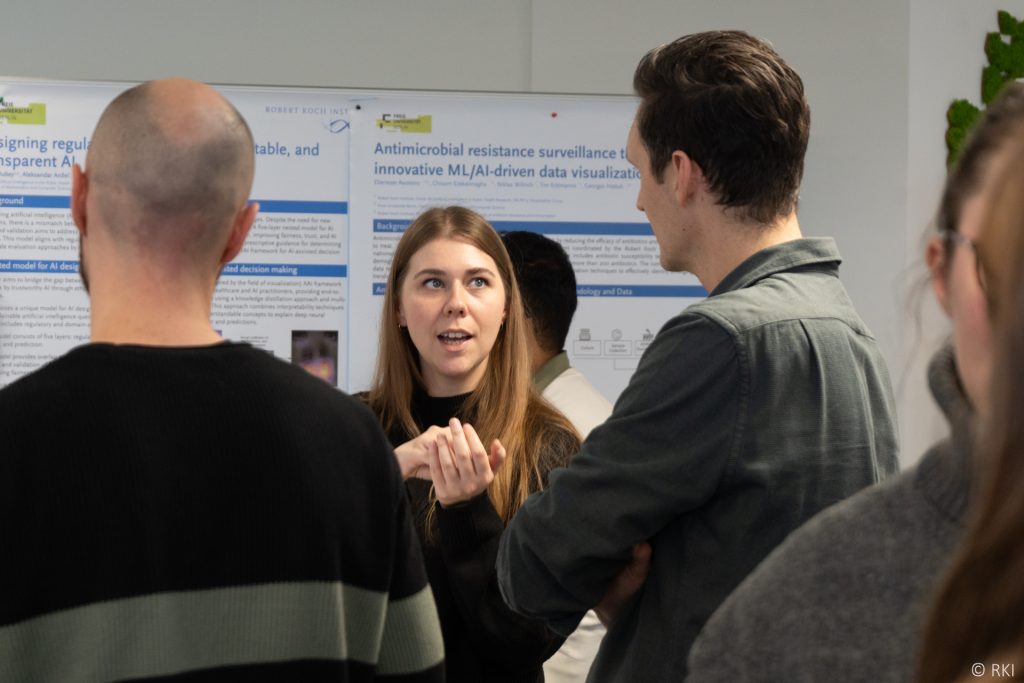
Over the course of three days, 15 PhD students participated in the program, engaging with researchers, industry leaders, and art curators. They explored diverse environments and organizations such as the start-up, ScholarMinds, which focuses on AI and education, Bliss Berlin—the Berlin Learning & Intelligent Systems Society, the Center for Artificial Intelligence in Public Health Research at the Robert Koch Institute in Wildau, and the Einstein Center Digital Future. At most of the research institutes, the WASP-HS students presented short takes on their own research and had the chance to meet others working on similar topics. The program also included an art exhibition on the Red Queen Effect in medical AI, as well as visits to Zeki Lab, the Center for Experiential Artificial Intelligence and Digitalization, the Weizenbaum Institute and the Hertie School’s Center for Digital Governance, where they got to speed date with other PhD students.
“The trip wasn’t just informative, it opened doors for future collaborations. My discussions at the Robert Koch Institute were especially productive and showed how these exchanges can lead to real opportunities,” says Igor Ryazanov, WASP-HS PhD student at Umeå University.
The program offered fresh perspectives even to those already familiar with Belin’s research landscape.
“I was already in Berlin as a visiting research fellow at the Weizenbaum Institute, so I knew some of the research environments, but I was struck by the sheer amount of AI research happening across the city. The trip gave me a valuable opportunity to explore a wide range of environments and discover overlaps with my own work,” says Emelie Karlsson, WASP-HS PhD student at Uppsala University.
Enriching Opportunities for WASP-HS PhD Students
The WASP-HS Graduate School organizes two study visits each year, offering PhD students unique opportunities to broaden their perspectives and connect with industry and research environments.
“I would encourage other WASP-HS PhD students to take the opportunity and participate in future knowledge exchange visits. They are truly enriching, and it is rare to have this kind of international exposure activities supported so generously in many other contexts, which is what the WASP-HS graduate program does even for their affiliated students,” says Aleksandra Mikhailova, WASP-HS PhD student at Stockholm School of Economics.
Details about upcoming study visits will be published on the Study Visits page of the website.
More Photos