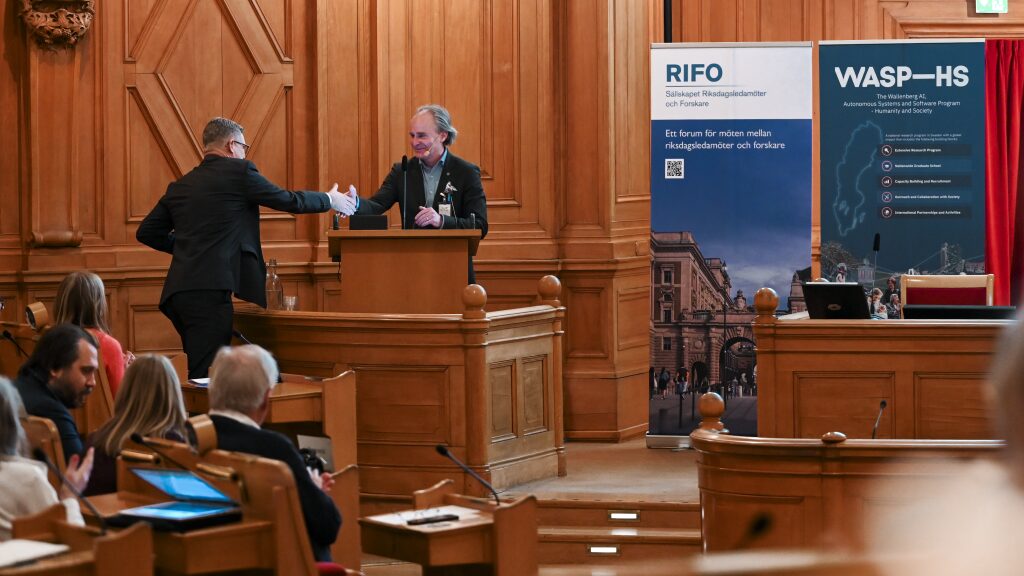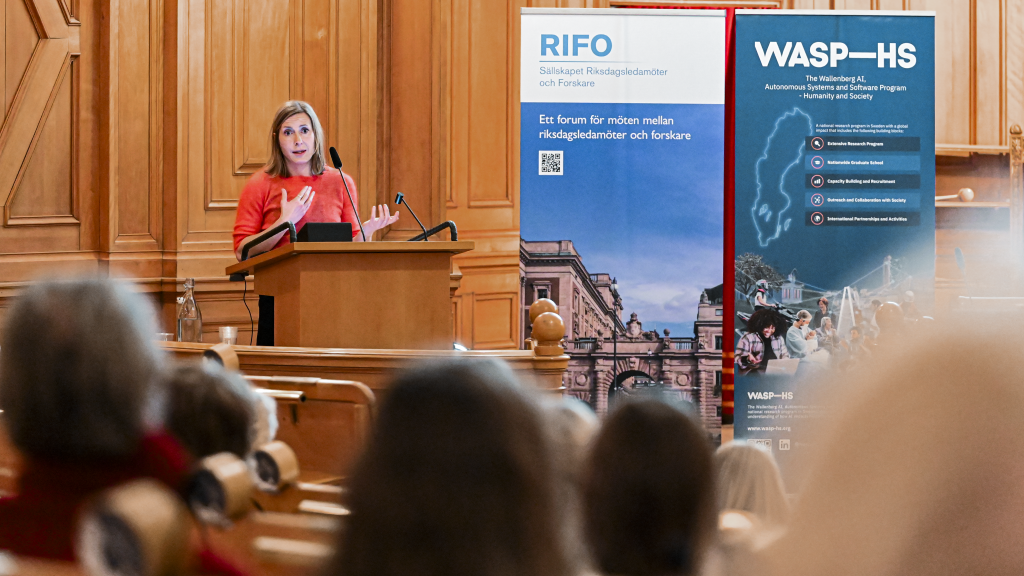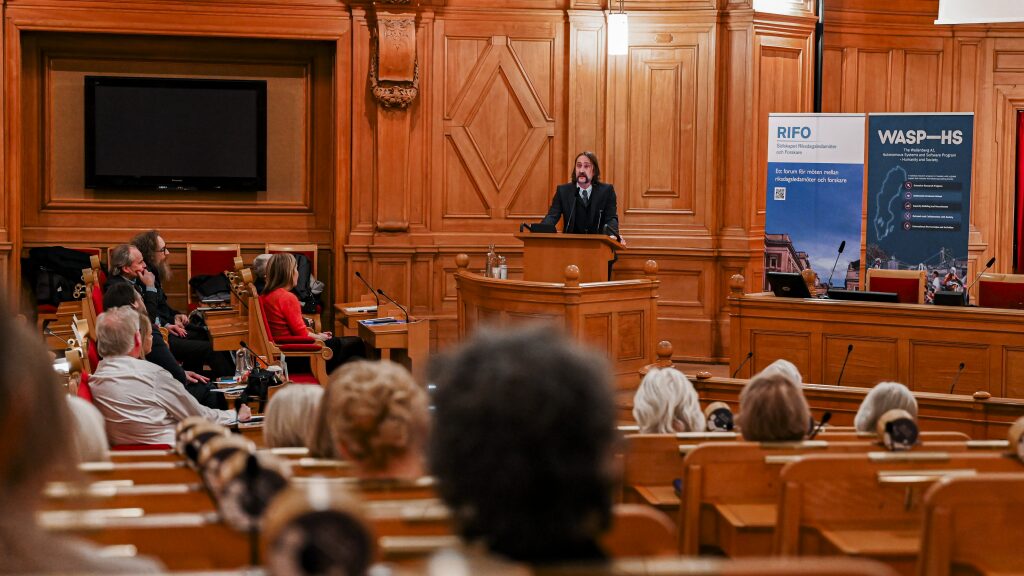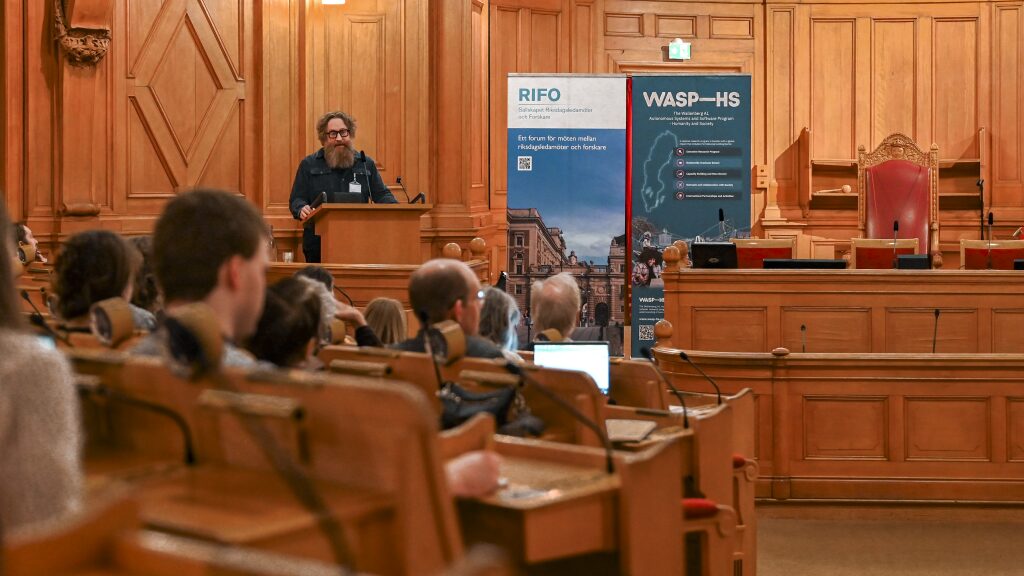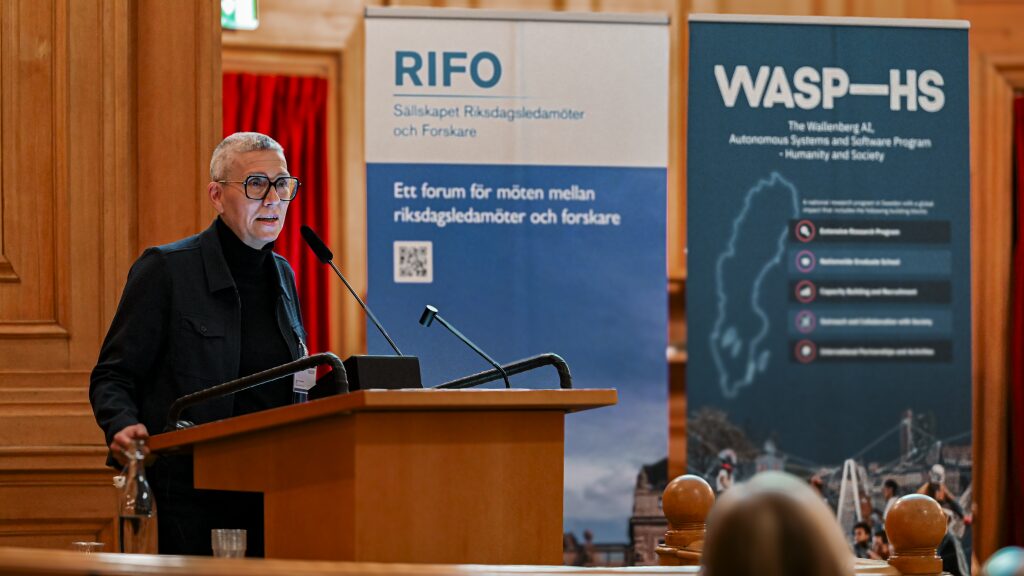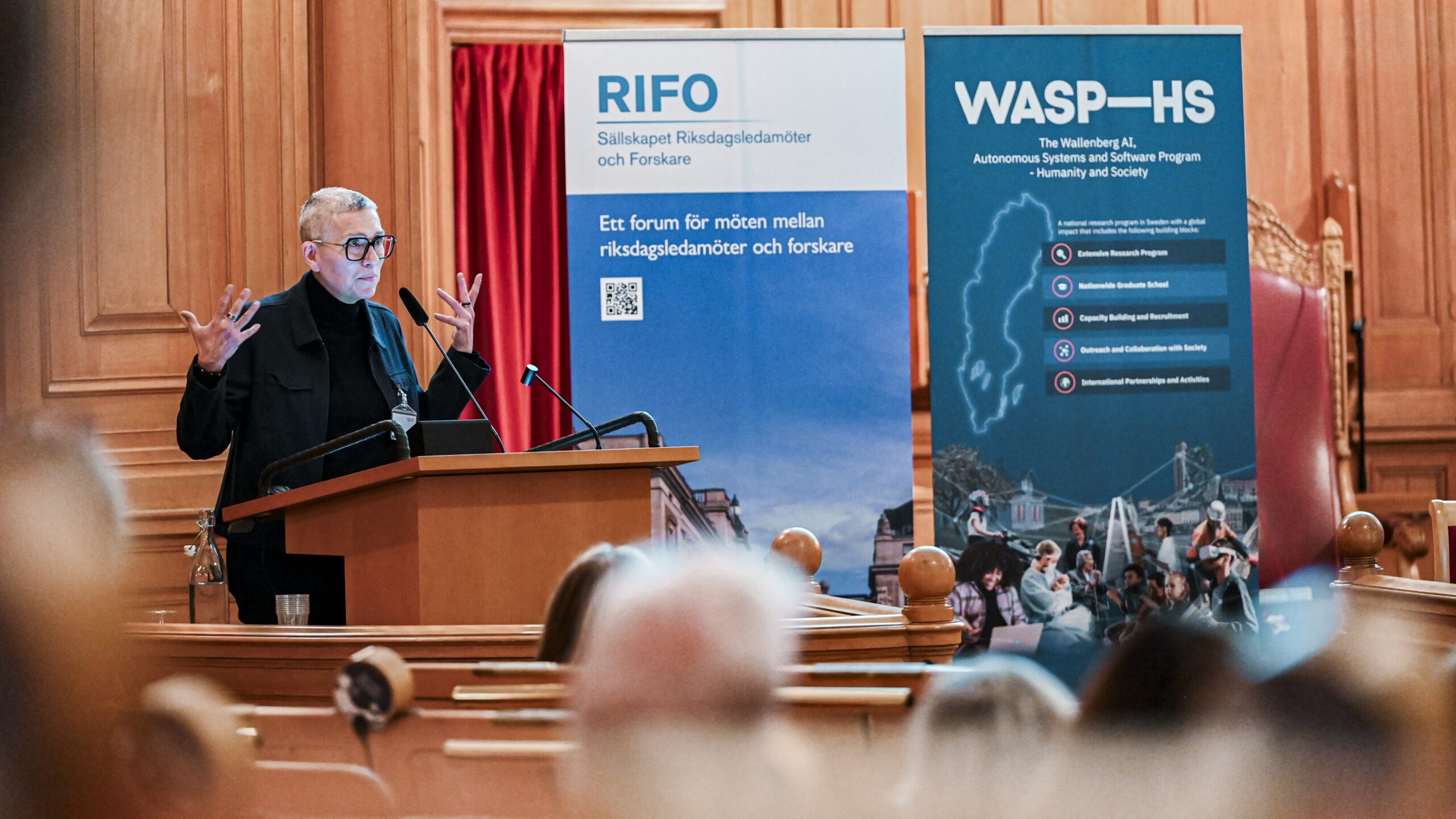
How does AI affect democracy and opinion formation? That was the focus when researchers and Members of Parliament met in the Swedish Parliament on 28 January for a seminar arranged by Rifo and WASP HS. The discussion showed that technology now plays an increasingly important role in both politics and the conditions for democracy.
When Sweden goes to the polls in September 2026, it will be in a political landscape transformed by artificial intelligence (AI). For the first time, AI may have a decisive influence on the election campaign – something researchers say places new demands on both politics and democracy.
“AI is not new, but in the upcoming Swedish election the technology may play such a significant role in the debate that we are facing the first so‑called ‘AI election’,” says Simon Lindgren, Professor of Sociology at Umeå University.
On 28 January, researchers from WASP HS gathered with Members of Parliament and the Rifo research network in the Swedish Parliament to discuss how AI is affecting Swedish politics and the future rules of democracy.
A Shared Reality in Transition
Malin Rönnblom, Professor of Political Science at Karlstad University, emphasized that democracy is built on a shared societal project.
“Democracy is living together – a joint project that never ends.”
But this shared experience is being challenged as AI becomes increasingly present in people’s information flows. According to Simon Lindgren, the technology risks creating uncertainty about what is true and what is manipulated.
“For democracy to function, we must share basic facts and exist in a similar reality. AI‑generated content can fragment our shared reality and make informed decisions harder.”
For example, troll factories and organized disinformation campaigns reinforce these problems by spreading false narratives on a large scale. The effect may be that voters base their political views on fabricated information.
“We are biologically programmed to trust what we see and hear. When that instinct no longer works, the political rules of the game change dramatically,” says Simon Lindgren.
A Threat to Testable Knowledge
At the same time, AI is becoming ever more integrated into daily life. Systems that analyze, suggest, and sometimes make decisions for us risk creating a society where people understand less and less about how information, and thus knowledge, is produced.
“If we increasingly let systems hold the understanding on our behalf, we slowly lose the sense of shared responsibility that keeps knowledge alive and comprehensible. Then we risk becoming users of intelligence rather than carriers of it,” says Jonas Ivarsson, Professor of Informatics at the University of Gothenburg.
He stresses that knowledge remains trustworthy precisely because it is testable and public.
“We don’t trust knowledge because it is always right, but because it becomes correctable when it is made public. In that way, knowledge tests itself before others.”
AI as a Political Issue
AI development is far from neutral. It is political, argue researchers Anne Kaun and Malin Rönnblom, and requires a broader democratic negotiation than what we see today.
“It’s a matter of who decides and who profits from the implementation. How are citizens affected and in what ways? Who benefits and who is disadvantaged?” says Anne Kaun, Professor of Media and Communication Studies at Södertörn University.
Malin Rönnblom warns that the political dimension risks disappearing when the AI debate focuses on technological development and international competition.
“The question ‘What kind of society do we want?’ gets pushed aside by another perspective: How do we get to the forefront?”
To meet this development, what Anne Kaun describes as an AI democracy is needed – a future in which the role of technology is shaped through open and inclusive processes.
“We need negotiations about an AI future that is inclusive and follows democratic principles. That is not what AI development looks like today.”
Malin Rönnblom underscores that this is also about responsibility.
“AI technology and the transformative changes we are facing should be a politicized issue. It is a matter of responsibility and a matter of political conflict and political struggle between different visions of what a society should be.”
More Photos from the Evening