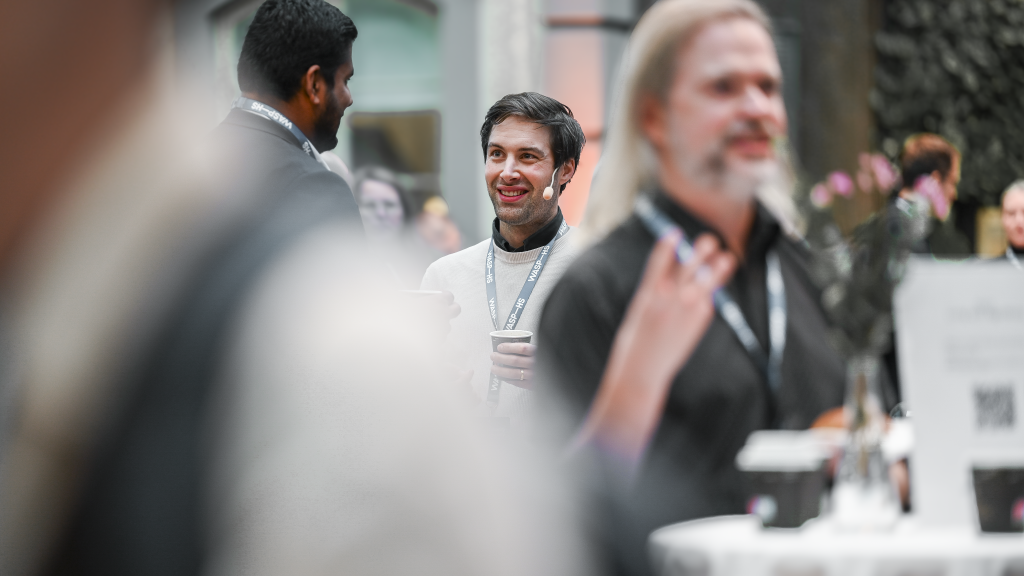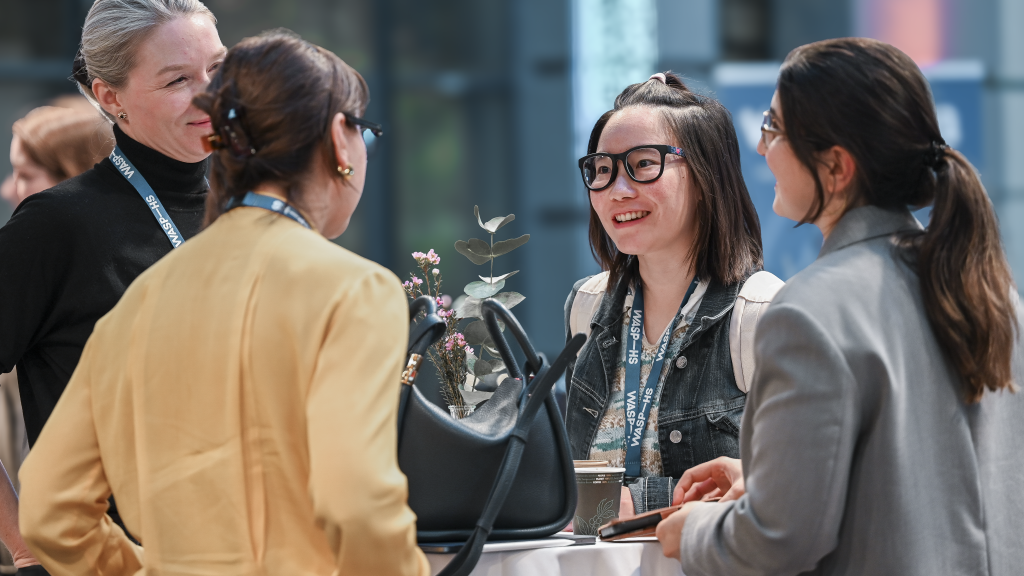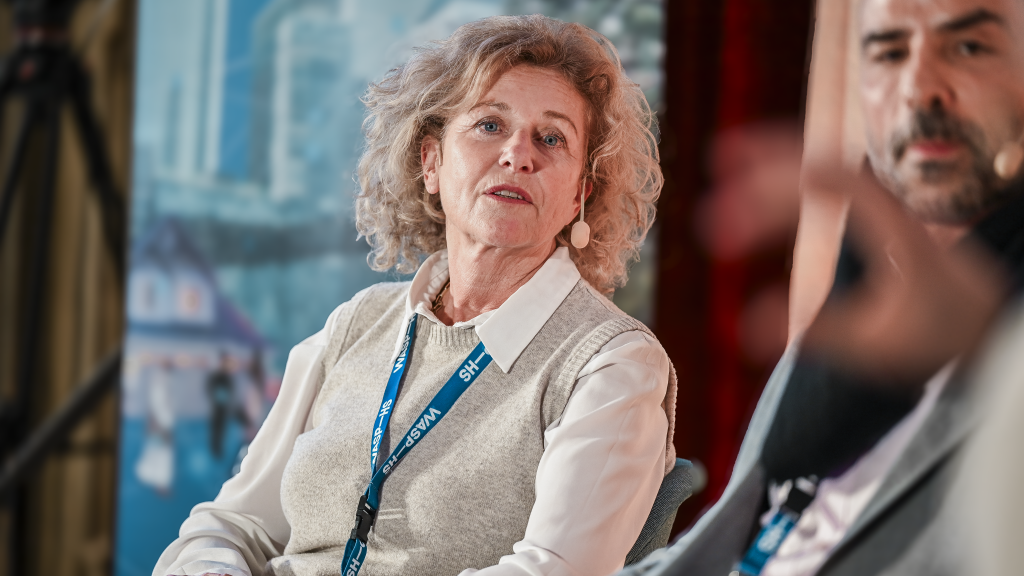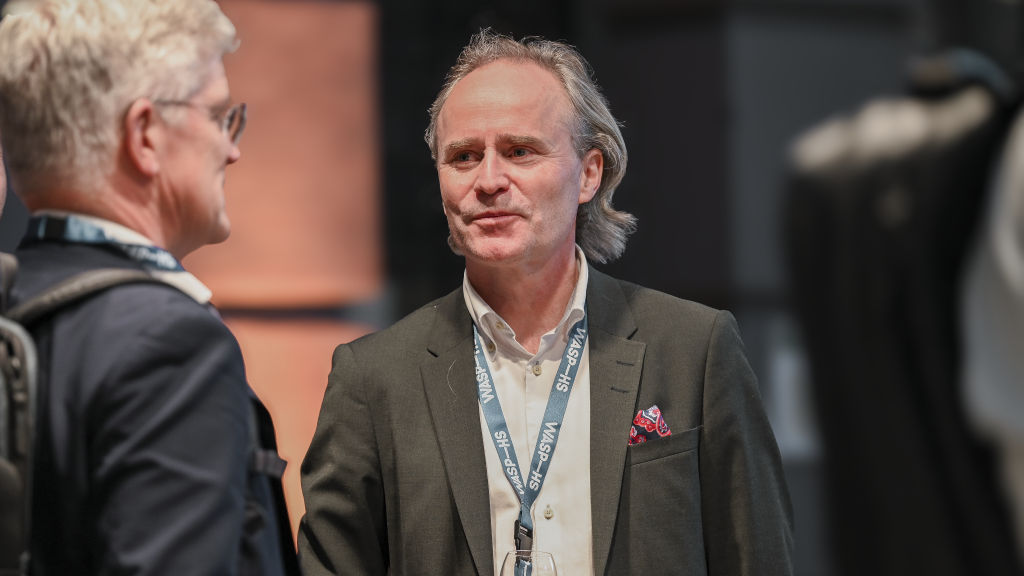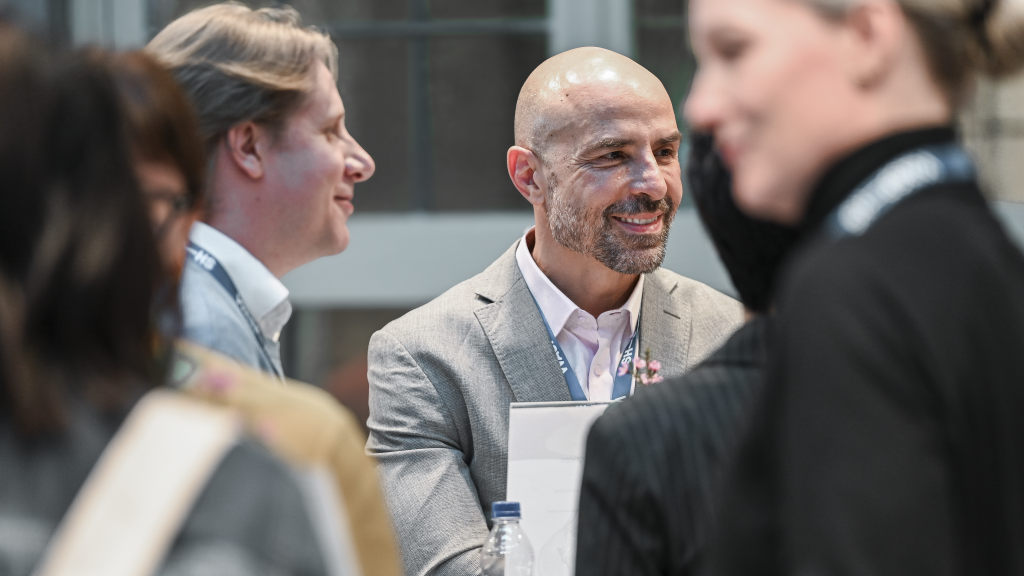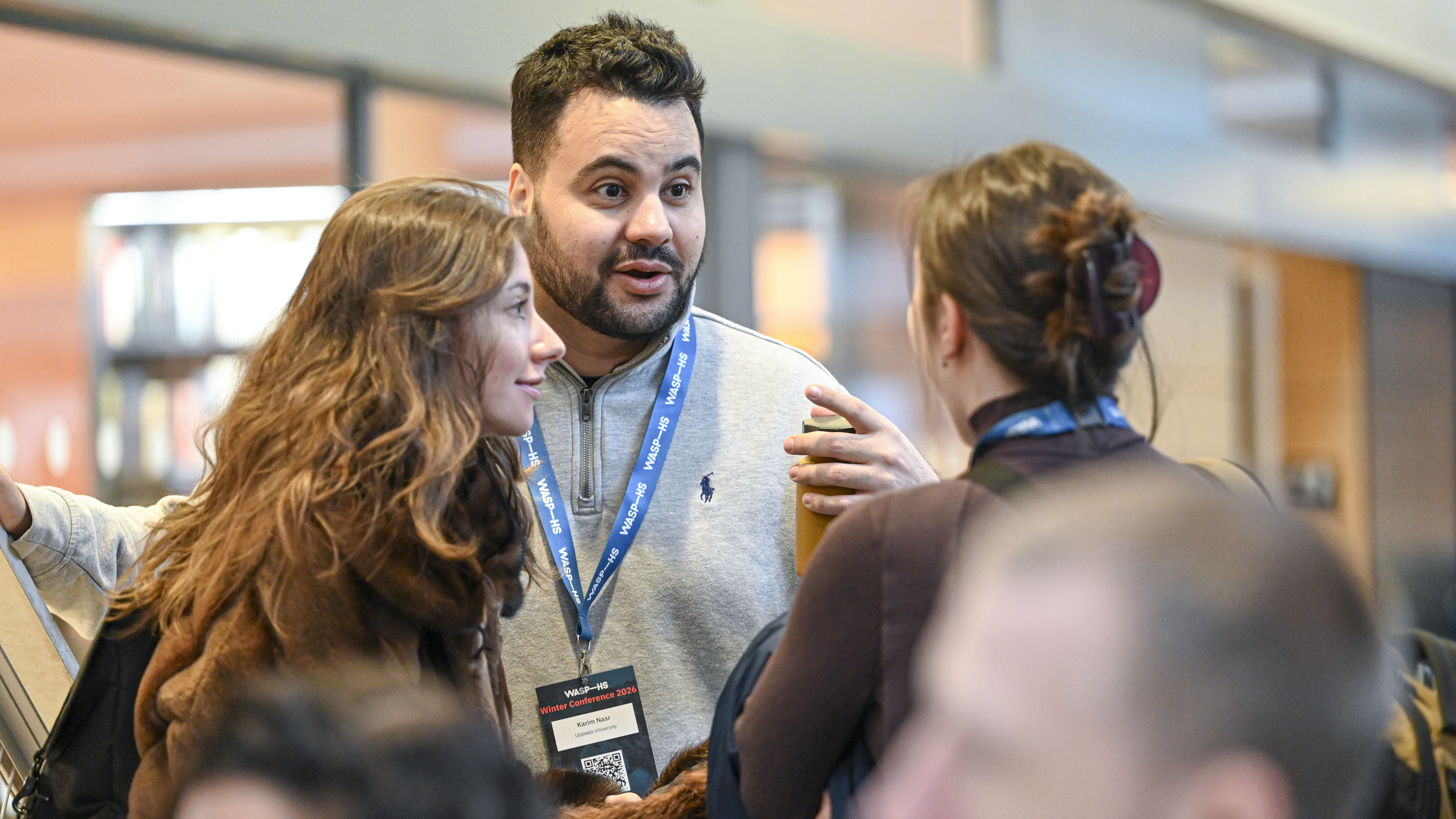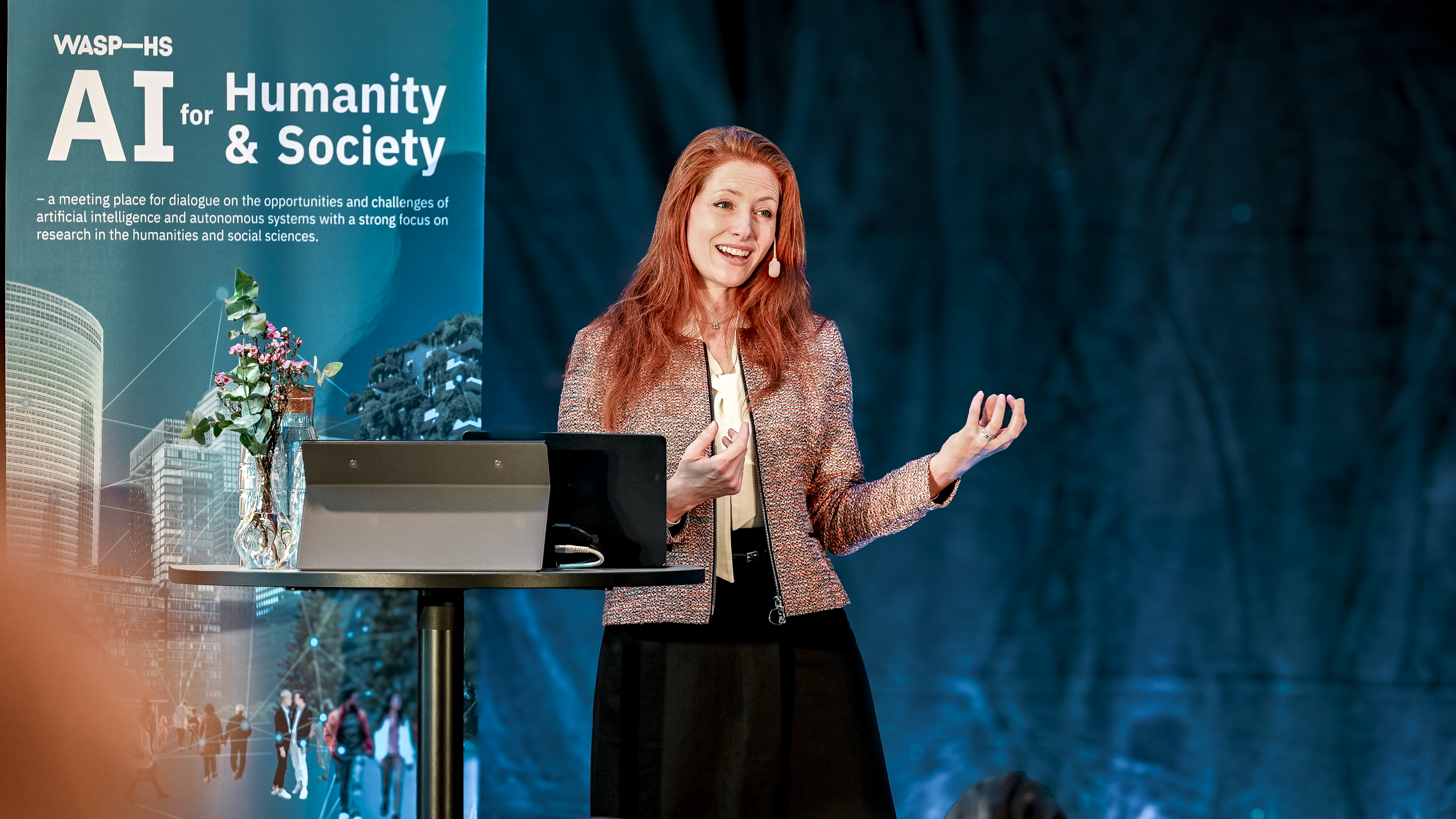
As trust in decision-makers declines and artificial intelligence (AI) gains increasing influence, new questions arise about the future of society. On October 9–10, WASP-HS brought together researchers and societal stakeholders at the Stockholm School of Economics for the conference AI for Humanity and Society, focusing on work, collaboration, and the power to influence in an AI-driven world.
AI for Humanity and Society is the annual WASP-HS conference, this year focused on the profound transformation AI has on human agency and how we work and collaborate. To discuss this, over 200 researchers, industry leaders, and members of civil society met up at Stockholm School of Economics.
“AI is not only changing technology – technology is also reshaping how we understand trust, the power to influence, and collaboration,” says Magnus Mähring, Professor at House of Innovation, Stockholm School of Economics, and one of the scientific leaders of the conference.
Taking Control in a Shift of Trust
“The explosion of AI is influencing how trust is formed, especially in Western societies,” noted Gillian Tett, Provost of King’s College, University of Cambridge.
Gillian described the emergence of a third form of trust, crowd trust, which complements the traditional horizontal trust between peers and vertical trust in authorities. For Generation Z, this means that experts and established media are often replaced by what others in their network think – and increasingly also by AI.
“For Generation Z, AI is a natural part of their digital everyday life – almost like a new member of their online community. AI bots provide advice and information, which means many in Gen Z often trust AI more than people. AI is perceived as accessible, personal, and controllable – unlike traditional authorities such as doctors or other experts,” says Gillian Tett.
“The question isn’t whether AI will affect us – it already does. The question is how we can restructure ourselves before AI fully shapes our societal structures,” said Juliane Reineke, Professor in Management Studies at the University of Oxford.
From Culture and Democracy to Welfare and Working Life
Five thematic research tracks within WASP-HS were presented, each exploring how AI is reshaping key dimensions of our society. These tracks reflect a broad and interdisciplinary approach to understanding AI—not just as a technological innovation, but as a societal transformation.
AI Futures of Culture and Memory
Anna Foka, Professor in Digital Humanities at Uppsala University and research leader of this theme, emphasized how AI is influencing our cultural heritage and collective memory.
“We explore how AI affects culture and memory, transforms institutions and professional roles, and shapes the future of sustainability and inclusion. Our goal is to coexist and co-create with technology in a sympathetic and technosymbiotic relationship.”
AI, Power, and Politics
Led in part by Eva Erman, Professor of Political Science at Stockholm University, this track investigates how AI intersects with democratic processes.
“We examine how AI impacts public opinion, democratic values such as trust and accountability, and how it reshapes the relationship between citizens and governance.”
The AI Welfare State
Anne Kaun, Professor in Digital Humanities at Uppsala University, is one of the leaders of the theme focused on the integration of AI into public institutions.
“We want to understand what the AI welfare state actually entails—how AI is used in public services, how citizens experience these interactions, and what vulnerabilities emerge in both technical systems and societal structures.”
AI and the Future of Work
Oskar Nordström Skans, Professor of Economics at Uppsala University, explores how AI is transforming the labor market.
“We study how AI changes work tasks, recruitment processes, and broader issues of social change and labor market policy. Our aim is to provide insights that help both policymakers and citizens navigate the future of work.”
The Rule of AI — AI, Regulation, and Society
“We explore how AI companions challenge legal frameworks—examining issues of responsibility, safety, and emotional impact, with the aim of shaping regulations that protect individuals in a digital society,” says Martin Ebers, WASP-HS Guest Professor, Örebro University.
Together, these research tracks illustrate that AI is not merely a technical development. It is a societal challenge that demands interdisciplinary research, inclusive dialogue, and new ways of thinking about the future.
All Speakers of the Conference
Anna Essén, Associate Professor, House of Innovation, Stockholm School of Economics
Anna Foka, Professor in Digital Humanities, Uppsala University
Anne Kaun, Professor of Media and Communication Studies, Södertörn University
Armin Catovic, Head of AI, Aloi and Vice Chair, Stockholm AI
Binette Seck, Tech Entrepreneur, Chairperson Microsoft AI Council
Charlotta Kronblad, Postdoctor, Informatics Department, Gothenburg University and Research Fellow, House of Innovation, Stockholm School of Economics
Christofer Edling, Professor of Sociology, Lund University, WASP-HS Program Director
Donal Casey, Senior Lecturer in European Law, Uppsala University
Elmira van den Broek, Assistant Professor, House of Innovation, Stockholm School of Economics
Eva Erman, Professor of Political Science, Stockholm University
Gillian Tett, Provost of King’s College, Cambridge
Helena Lindgren, Professor in Computer Science, Co-Director of WASP-HS, Umeå University (Moderator)
Jonas Tallberg, Professor of Political Science, Stockholm University
Juliane Reinecke, Professor of Management Studies, Saïd Business School, University of Oxford
Lisa Irenius, Editor-in-Chief and CEO, Svenska Dagbladet
Lisen Selander, Professor of Information Systems, University of Gothenburg (also Moderator)
Magnus Mähring, the Erling Persson Professor of Entrepreneurship and Digital Innovation, Stockholm School of Economics (also Moderator)
Marleen Huysman, Professor, School of Business and Education, Vrije Universiteit Amsterdam
Martin Ebers, WASP-HS Guest Professor, Örebro University
Mia Liinason, Professor of Gender Studies, Lund University
Nicolette Lakemond, Professor in Industrial Management, Linköping University
Olgerta Tona, Associate Professor, Department of Applied IT, University of Gothenburg
Oskar Nordström Skans, Professor of Economics, Uppsala University
Panos Constantinides, Professor of Digital Innovation, Alliance Manchester Business School, The University of Manchester
Pontus Strimling, Professor of Analytical Sociology, IAS and Research Leader, Institute for Futures Studies
Sebastian Krakowski, Assistant Professor, House of Innovation, Stockholm School of Economics
Stefan Larsson, Associate Professor in Technology and Social Change, Lund University
Teresa Cerratto-Pargman, Professor of Human-Computer Interaction, Stockholm University
More Photos from the Conference