
In recent years, the global conversation around artificial intelligence (AI) and digital health has grown increasingly ambitious. In menstrual and women’s reproductive health, promises of efficiency, reach, equity, and bodily autonomy inspire hope and concern, especially for women in communities at the margins of AI innovation. Yet these conversations often overlook a crucial question: Whose values and experiences shape these technologies, and who is being left out? This was one of the central questions I explored during my recent semester abroad in Zimbabwe.
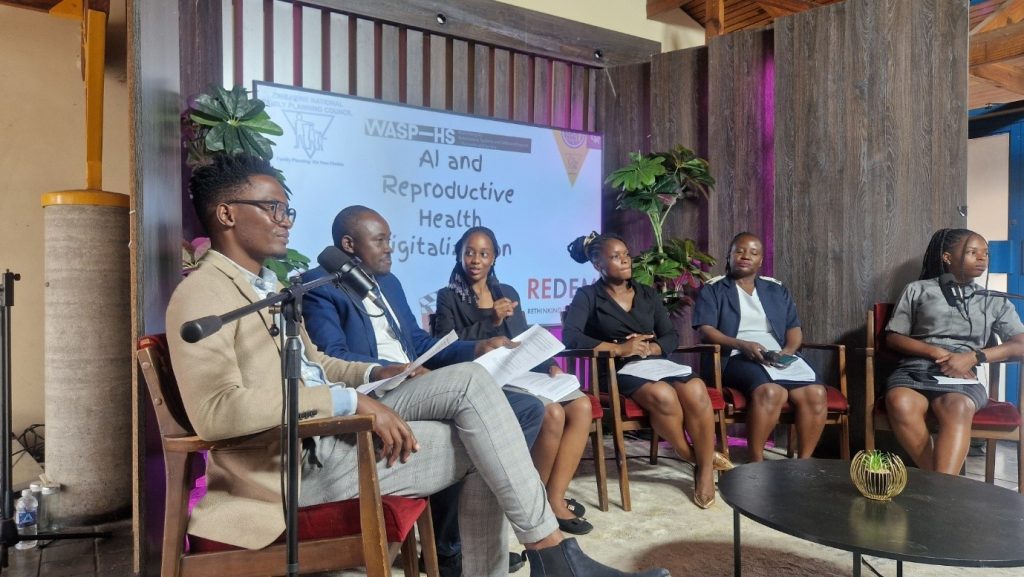
I engaged with communities through participatory fieldwork on AI and digital health, focusing particularly on sexual and reproductive health (SRH). To gain an in-depth understanding, I facilitated community dialogues, worked alongside institutions and stakeholders in SRH, and conducted focus group discussions across rural and urban areas. Through this process, my own positionality became clear: who I am, and the role I am playing. More importantly, whose views should I represent or have a side, to begin with? Meaningful technological progress in health must begin not with software but with people. I came to realise that I may not have all the answers, but these communities do. While they may not have access to the same resources as other parts of the world, their situated knowledge and social conditions offer valuable insights. It was this mutual exploration and learning process of what AI and digitalisation mean to them that the co-construction of digital artefacts became central to my work.
Peripheral, Not Passive Recipients
Like many countries in the Global South, Zimbabwe is often portrayed as a passive recipient of technological innovation. However, my research and the voices of the women, youth, nurses, and facilitators I encountered tell a different story. Communities at the ‘so-called’ periphery actively engage with digital tools such as period trackers, chatbots, and mHealth platforms. They do not simply adopt these technologies. They interpret, adapt, and sometimes contest while trying to make sense of them. They raise critical questions: what is being tracked, who controls the data, and what the risks are when health becomes algorithmic?
In Zimbabwe, reproductive health is not merely clinical. It is spiritual, cultural, and political. Reproductive health management and governance should also be viewed as a colonial legacy in this context. These locally grounded understandings of health are not inferior. They shape how individuals and communities experience and manage their well-being. Introducing universalistic technological interventions such as period trackers without acknowledging these perspectives and dynamics is not innovation. It is erasure.
Ethical Co-Construction, not Techno-Delivery
A central concern from my research is the need to move beyond the prevailing model of healthcare intervention, which often treats communities as passive recipients of digital solutions. Instead, I observed the need to shift toward co-constructing meanings and values with these communities. This involves engaging them in user-testing and design, evaluation, and governance. Substantive inclusion of their stories, knowledge systems, and ethical concerns must inform how we define success in AI health interventions.
For example, several women I spoke with appreciated the ability to track their cycles. However, some expressed concern that these apps often contradict traditional ways of understanding the body and may erode a sense of social identity and belonging. Others feared the misuse of their data, particularly in contexts where reproductive autonomy is politically or culturally contested. These concerns are not simply anecdotal. They are epistemic interventions and reminders that health and technology are inherently political.
“Real Progress Requires Rejecting Simplistic Narratives”
As Donna Haraway suggests, we must learn to “stay with the trouble.” My semester in Zimbabwe did just that. AI and digitalisation can either follow a path of universal assumptions or meaningfully engage with the complexities faced by those excluded from the innovation process. Real progress requires rejecting simplistic narratives and embracing the contradictions and shared responsibilities that come with ethically responsible innovation. AI in reproductive health cannot be ethically or effectively implemented without listening deeply to the people it is meant to serve, especially those historically left out of its design due to systemic and structural legacies of global socioeconomic disequilibria. This is not only an ethical concern. It is a necessary reflection on the billions of dollars invested in technological interventions that risk failing half the world’s population.
More About AI and Digital Women’s Reproductive Health Interventions
Do not hesitate to contact Dennis Munetsi, PhD student in Global Political Studies at Malmö University, if you are interested in discussing issues of AI and digital women’s reproductive health interventions for women in peripheral communities in AI innovation.