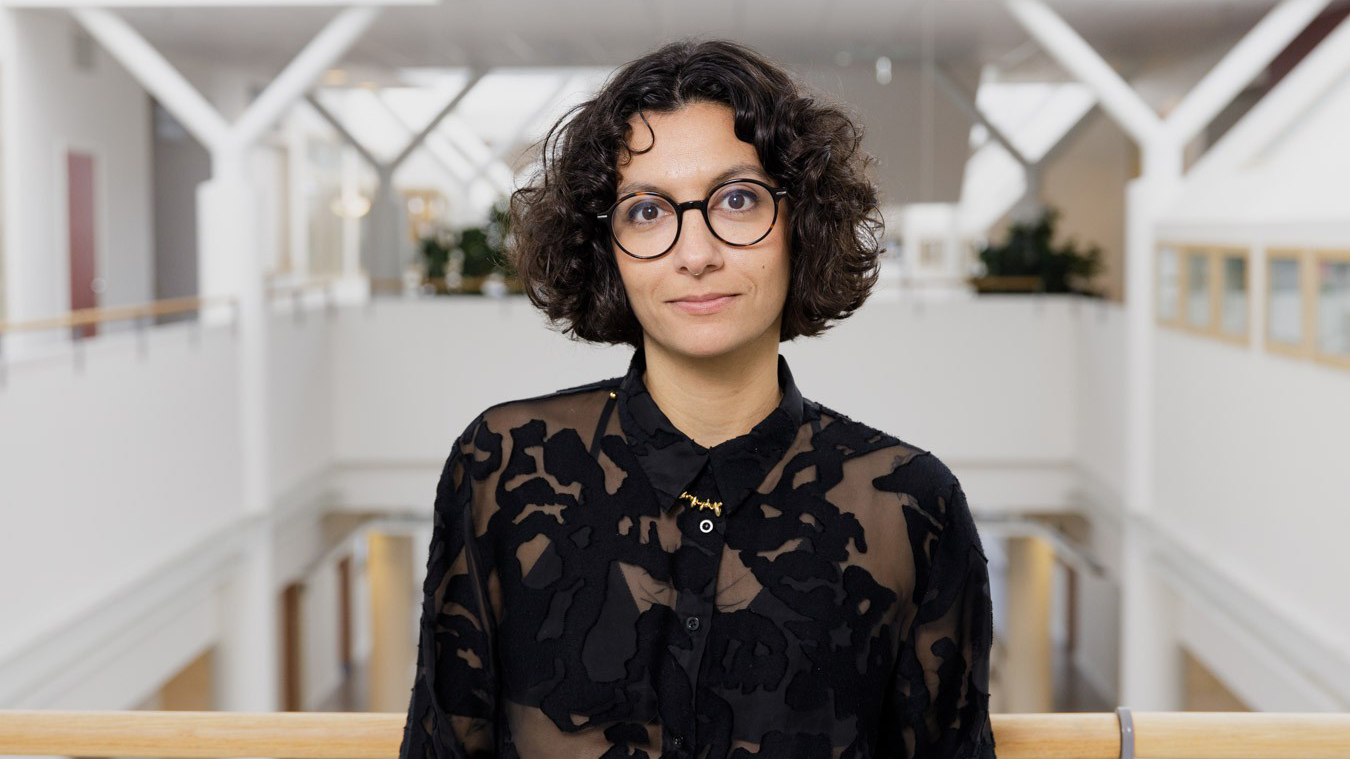
Mafalda Samuelsson Gamboa defends her doctoral thesis, “Design Sensibilities: Corporeal Theories as Embodied Epistemology for Design Research“, at Chalmers University of Technology on 17 September 2026.
Abstract
Starting with a seemingly bounded design brief—studying and designing social drones—this thesis gradually opens into an inquiry into how design knowledge forms those who practice it. Rather than treating design as a neutral means of intervention, the work attends to design sensibilities: the embodied, relational orientations through which designers come to perceive, act, and live in the world. These sensibilities operate as corporeal theories; becoming a skin that accumulates, hardens, softens, and is shed over time.
Theory is often treated as something we apply to practice, or extract from it after the fact. Here, there is a different premise: that theory within design is already being made in the fostering of sensibilities. I argue that attending to and articulating sensibilities as a form of intermediate-level knowledge allows us to understand it not only as abstraction, but as something that transforms bodies, relationships, and ways of being in practice. Through first-person methods, longitudinal autoethnography, and material making, the work traces a shift from naïve engagement to critical disillusionment, and onward to a reconfiguration of what it might mean to practice and theorise design otherwise. As the research moves with its time—through intensifying technological concentration exemplified by the case of drones—it bears witness to where imagination feels institutionally and intentionally foreclosed. Rather than smoothing over these ruptures, the thesis centres them as sites where design theory is remade through corporeality rather than represented as a lens.
The dissertation is a non-linear constellation of collaborative experiments, including pictorials, critiques, and co-authored texts and designs structured in three chapters. The first focuses on refusing the inevitability of drones, the second describes design epistemology as sensibilities, and the third opens paths forward for design as an implication from a turn to sensibilities. This compositional choice resists the primacy of individual authorship and challenges academic norms that locate rigour in separation between theory and practice, researcher and subject, or singular voice and collective inquiry. I discuss co-constructed relational knowing not only through artefacts or arguments and shared attentiveness through reflexive and diffractive thinking and making. At its core, this thesis argues for an expanded understanding of designerly knowledge: one that takes seriously how design epistemologies act upon designers themselves. It joins conversations on design otherwise and on making trouble, proposing that withdrawal, instigation, refusal, and pauses in making are not endpoints but part of a broader repertoire of design actions in grave need of a collective stance. Design practice unfolds alongside social, political, and ecological rupture, coming to terms with its impossibility under the violence of capitalism. By articulating sensibilities as both knowledge outcome and method, the thesis invites a rethinking of design research as a practice of becoming: with others, attuned to the collective sensibilities required to navigate worlds that are increasingly difficult to design within. It culminates in a call for design as a pre-revolutionary act.
Supervisors
Sara Ljungblad, Associate Professor at University of Gothenburg
Kristina Höök, Professor at KTH Royal Institute of Technology
Opponent
Johan Redström, Professor, University of Gothenburg