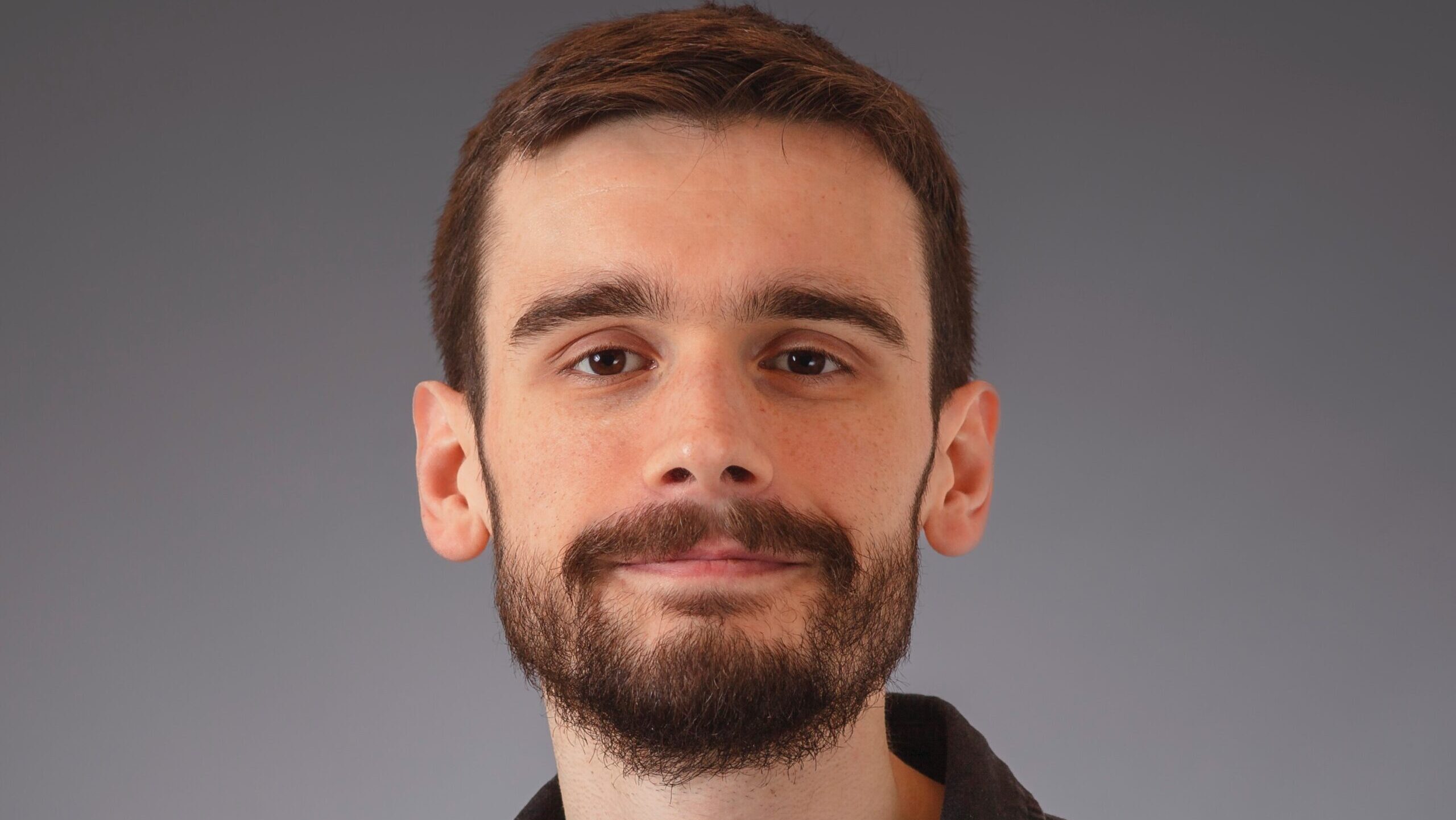
Igor Ryananov defends his doctoral thesis “Computational Analysis of Linguistic Agency“, at Umeå University on 26 October.
Abstract
Contemporary news ecosystems are brimming with stories and narratives that are often blurry, overlapping and contradictory, and the sheer amount of content is unprecedented. At such a scale, quantitative approaches to narrative analysis can both assist traditional qualitative research and produce their own unique insights. Many of these methods belong to the field of Natural Language Processing (NLP), which has seen tremendous advances in recent years, primarily driven by new large language model (LLM) architectures that support systems capable of solving highly contextual, complex language tasks. Among these computational tasks, there are a few that concern identifying narrative elements and tropes. This work focuses on a particular property that a character can have in a story, namely agency and its linguistic expressions. In other words, if someone is described in a story, are they described in a way that shows their capacity to act intentionally? Or are they just a passive participant? And what if an agent is missing entirely or vaguely implied? Do things just happen? These questions matter when it comes to news coverage that informs our worldview: responsibility for crimes may be overstated or shifted, societal problems blamed on intractable outsider forces and entire populations dehumanised and deprived of agency.
To study this vital narrative component, this thesis uses a broad selection of NLP algorithms, from topic modelling to the latest LLMs, and integrates them into purely quantitative and mixed-method methodological pipelines that aim to balance access to the breadth of large news corpora and the ability to identify and isolate smaller tropes and recurring themes. The first contribution is, therefore, presenting flexible computational methodologies to study agency-related narratives. The second contribution pertains to conceptualising agency as a standalone task for NLP models. To this end, annotation and prediction experiments are conducted. Last but not least, the thesis contributes to the field of media studies by providing new insights into several currently relevant topics, from how news reports anthropomorphise AI systems to whom they attribute killings in military conflicts.
Supervisor
– Johanna Björklund, Professor in Computing Science, Umeå University
Opponent
– Luca Maria Aiello, Professor, IT University of Copenhagen, Denmark