

This website uses cookies so that we can provide you with the best user experience possible. Cookie information is stored in your browser and performs functions such as recognising you when you return to our website and helping our team to understand which sections of the website you find most interesting and useful.

Unfolding the Interactive and Sociomaterial Landscape of Robotic Failures – PhD Defense
November 7 @ 10:00 - 13:00
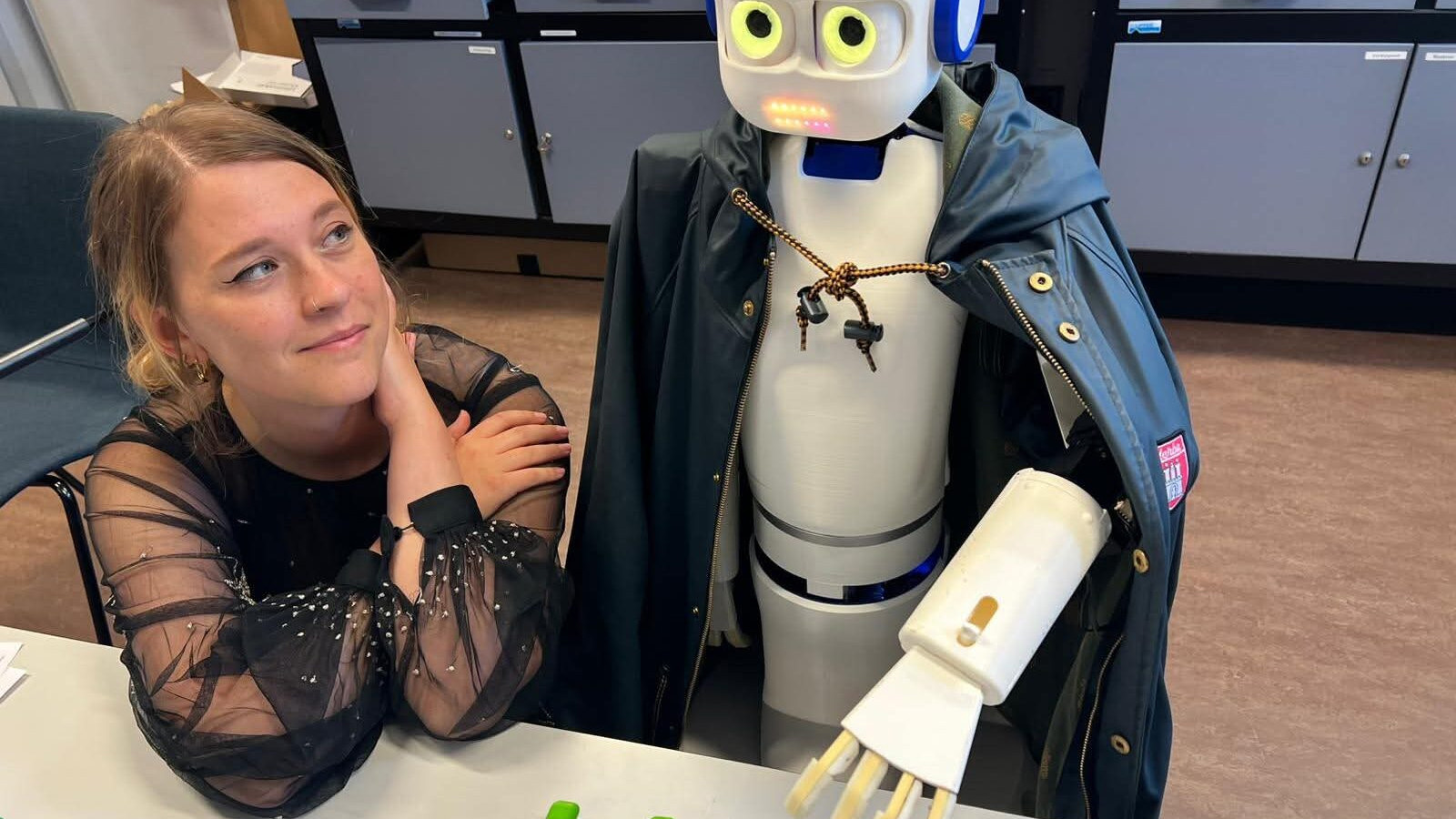
Samantha Stedtler defends her doctoral thesis, “Unfolding the Interactive and Sociomaterial Landscape of Robotic Failures”, at Lund University on November 7.
Abstract
This thesis examines robotic failure from the perspective of its social implications for human-robot interaction (HRI). Drawing on prior literature on the definitions, taxonomies, and motivations for studying robotic failure, the included papers focus on how humans respond to failure in HRI. In particular, the papers examine changes in attention, as well as human responses such as repair, helping, and other forms of recovery, and how these responses can develop into forms of labor. Throughout the papers included in this thesis I make the following key contributions.
First, the influence of robotic movement delays on human gaze patterns and their association with perceptions of the robot and the interaction are examined. The findings show that delays are associated with lower overall gaze toward the robot, interpreted as reduced attention. At the same time, participants tend to look more at the robot specifically during delay periods, after which this heightened attention decreases again. Gaze behavior was also associated with perceptions of interaction fluency, robot likability, and attitudes toward robots. Second, the same interaction was investigated in greater detail, focusing on moment-to-moment responses to spontaneous robot failures. Third, I formulate the concept of compensatory interactional labor (CIL), grounded in the notion of invisible labor but characterized by a number of specific features. CIL is performed to compensate for robots’
shortcomings, occurs in situ and spontaneously, and is accomplished through embodied practices while following the norms and structures of interaction. Such labor may be invisible, but is not necessarily so. Fourth, instances of CIL are systematically gathered in a scoping review, resulting in the identification of several categories of CIL. The review also examines the types of failures that co-occur with CIL, as well as the settings, contexts, and roles of the humans and robots involved. Fifth, we investigate third-person expectations for co-present humans to perform CIL. The findings suggest that introducing a robot into a healthcare setting may lead responsibility and expectations to compensate for the robot to spill over onto co-present human actors when a failure occurs.
Overall, the papers examine how situated interaction, social norms, expectations, and material arrangements shape how robot failures are interpreted and dealt with, as well as the broader consequences that follow from these processes.
Supervisors
– Valentina Fantasia, Associate Professor, Department of Philospphy and Cognitive Science, Lund University
Opponent
– Kerstin Fischer, Professor, University of Southern Denmark