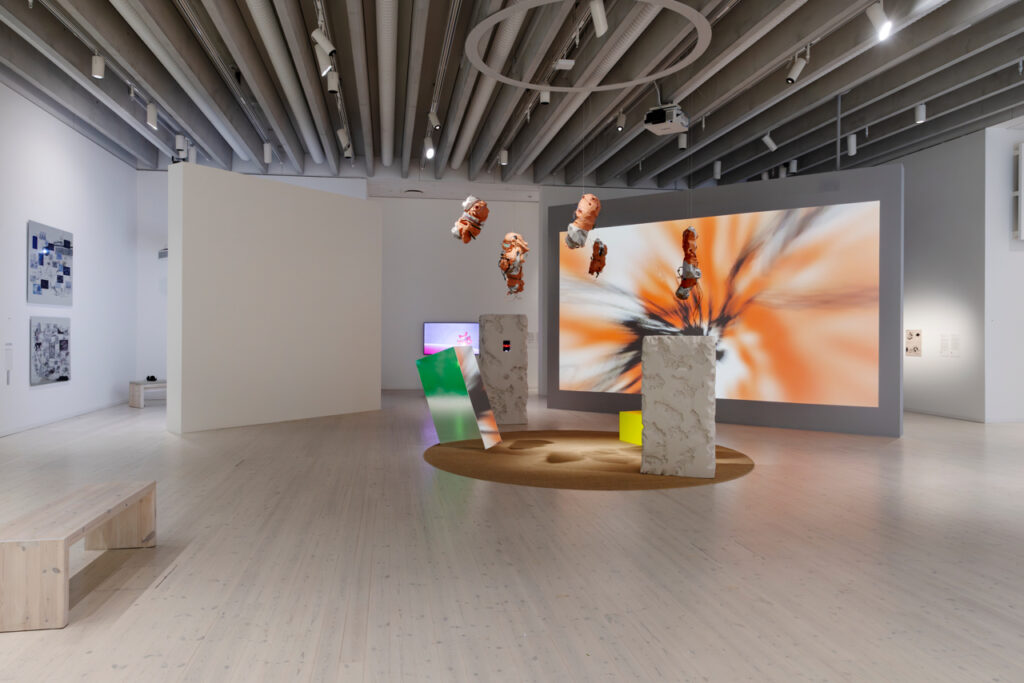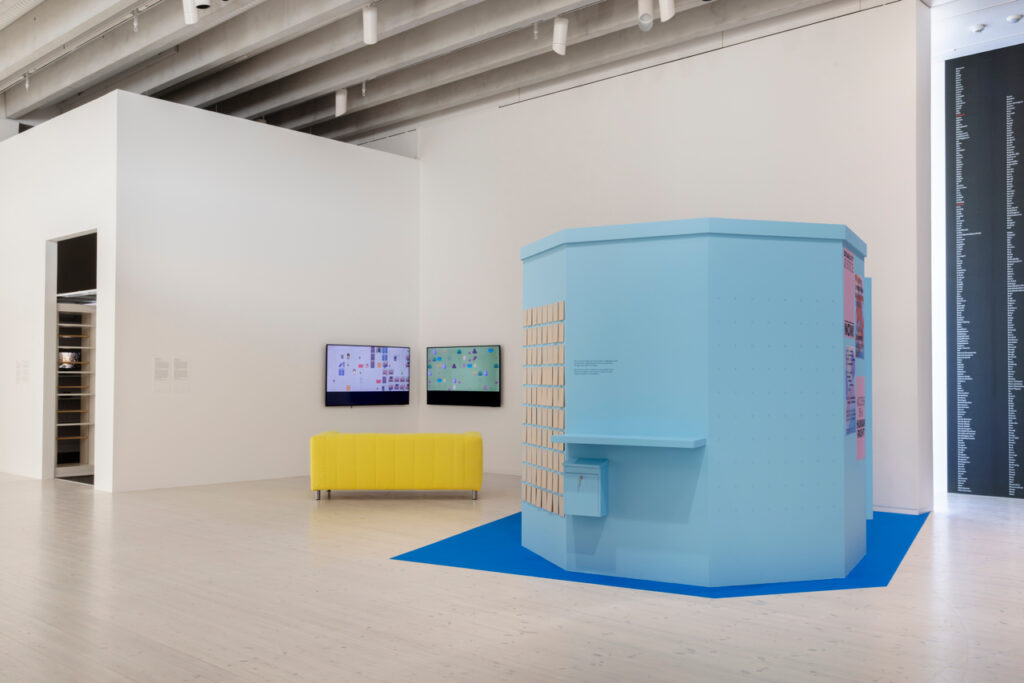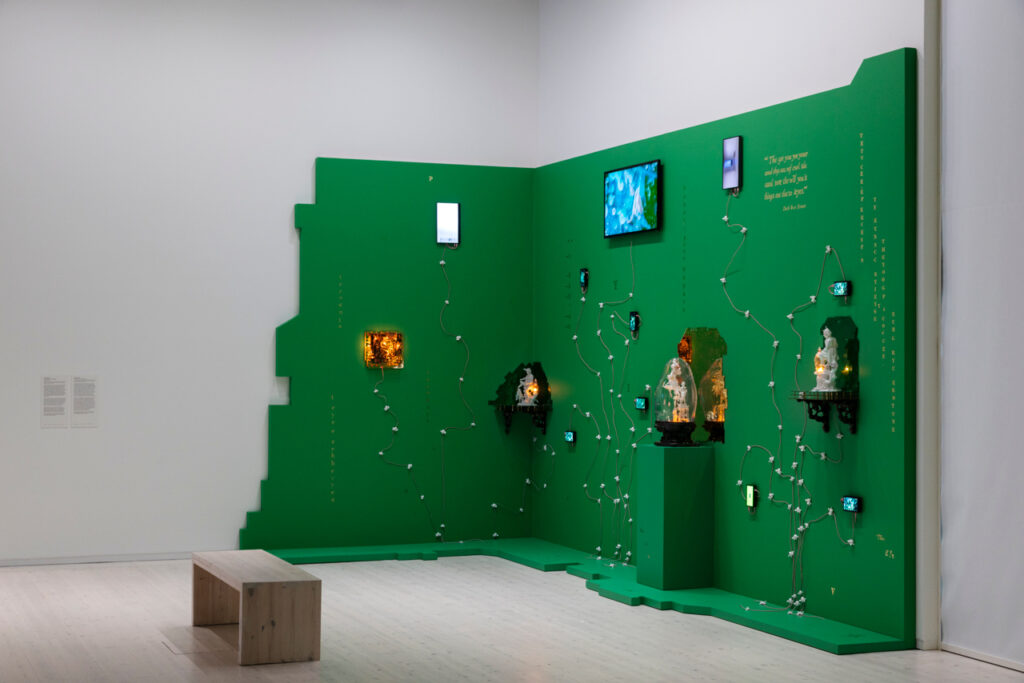
Who is in control when AI enters our lives? WASP-HS Guest Professor Sarah Cook curates the newest exhibition “AI and the Paradox of Agency” together with Museum Director Katarina Pierre at Bildmuseet in Umeå. The exhibition explores who holds power when AI enters our lives and is now underway until January 2027.
AI technology gives us the ability to sort through enormous collections of content and instantly show what we want. It also gives us the power to generate material in seconds. But with this new ease and speed, is there a catch?
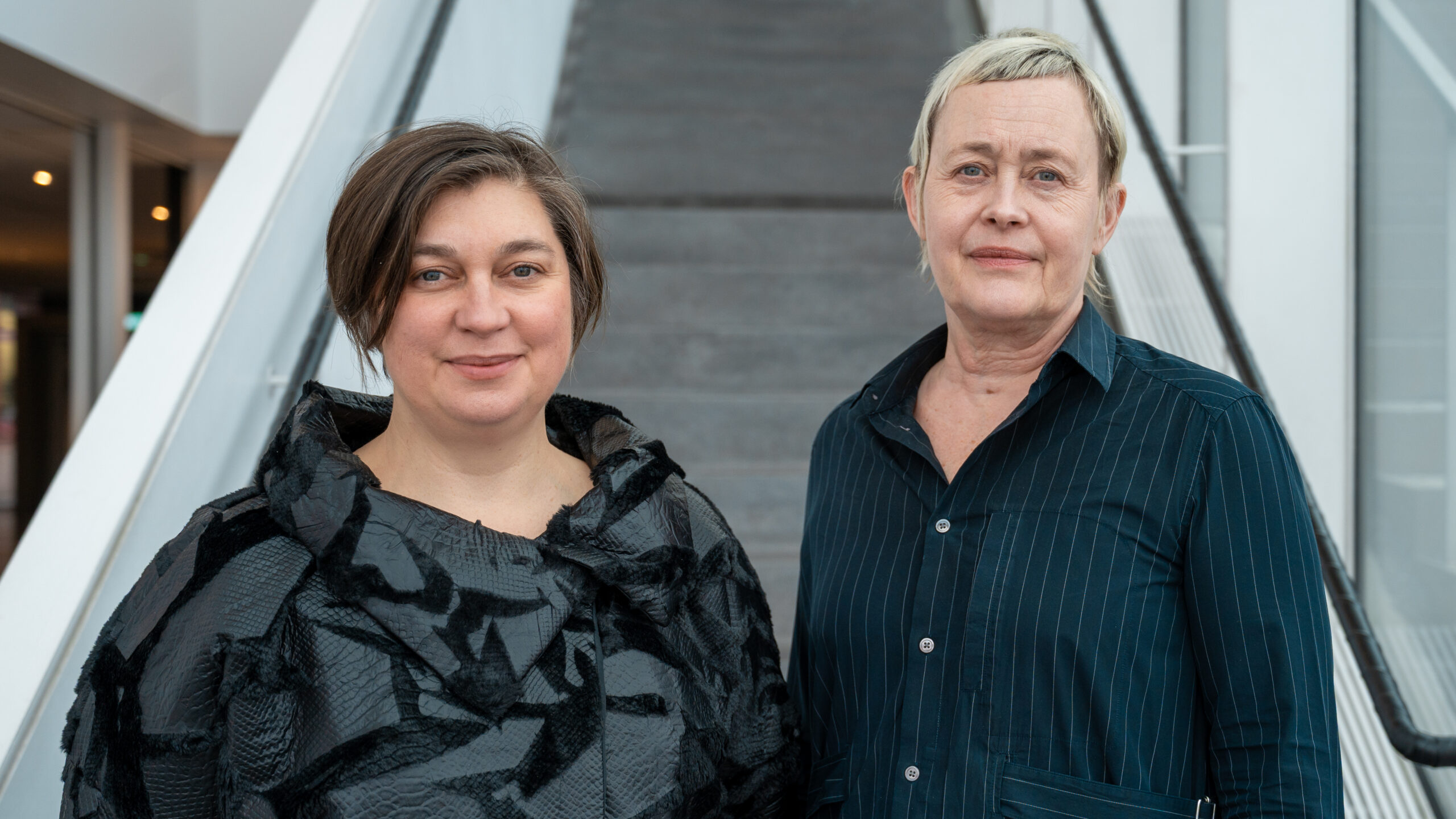
AI and the question of whether we have the power to think and act on our own agency is explored at the newly installed exhibition ‘AI and the Paradox of Agency’ at Bildmuseet in Umeå. The exhibition is curated by Sarah Cook, WASP-HS Guest Professor at UmArts, and Katarina Pierre, Museum Director of Bildmuseet.
“What we ultimately want people to take away is an understanding that they do have a choice – and how they can exercise that choice. We want them to be aware of their own agency, their own power to decide whether and how they want to use AI. We want them to feel informed and encouraged to think for themselves,” says Sarah Cook.
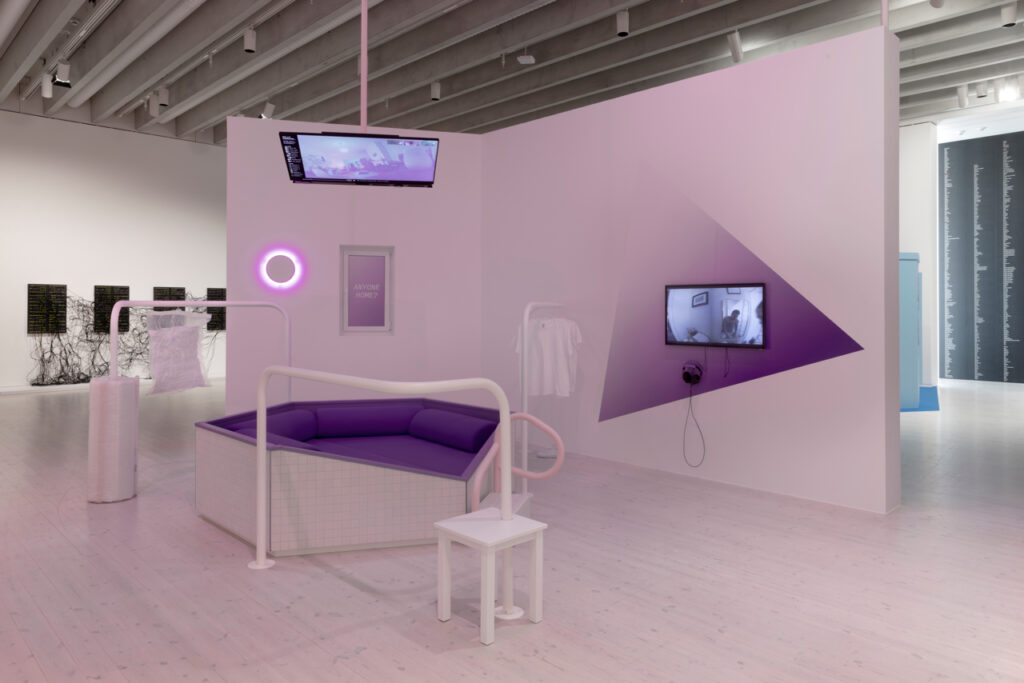
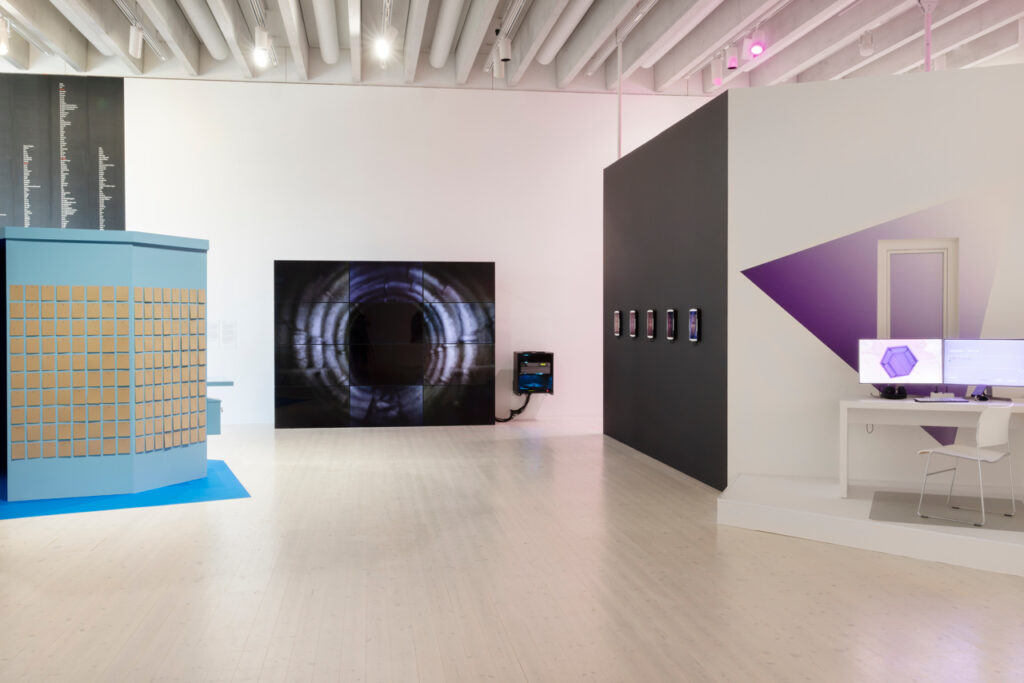
The exhibition covers two full floors at Bildmuseet in Umeå and features 19 artworks, some never seen before, including interactive games and installations as well as a drone-activated hand-painted textile and a work that is watching you. 25 artists from across the globe have contributed to the exhibition.
“Katarina and I have curated works that encourage viewers to reposition their perspective on AI – to think beyond themselves. A key criterion was whether the work prompted them to consider their own relationship to AI,” Sarah says.
Lacuna – What Is Lost, Gained, and What Remains
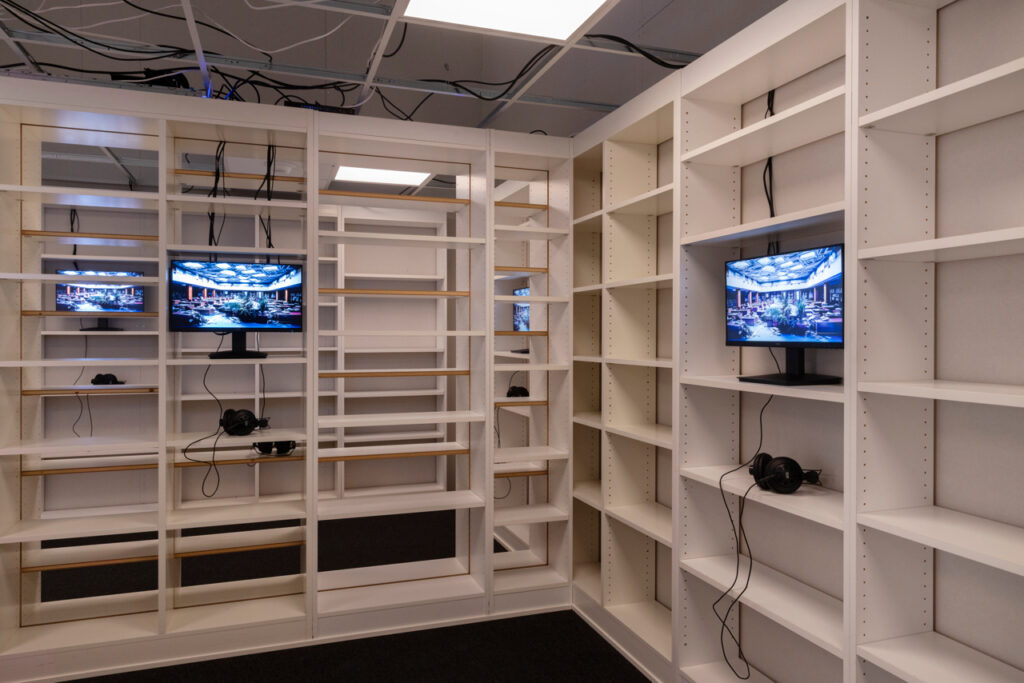
One of the artists is Daniel Shanken, WASP-HS Postdoctoral Research Fellow at Umeå University. With his work, titled Lacuna, Daniel reflects on how we process the quiet loss of the real in favour of the poor copy when AI technology infiltrates our perception and memory. A discrete camera captures images of the visitors to the museum, analyzing their features such as their emotion, age, and color of their clothes, and a locally-served AI system then generates new photographs of empty spaces, never showing the same one twice.
“When we offload our agency and cognition, what fills that empty space as we trade our complexity for poor copies and flattened knowledge? When we are flooded by generated content, does it affect how we process the world around us and how we look back at our own memories? I’m interested in what is lost, what is gained, and what remains in the hole left behind,” says Daniel Shanken.
Artists of the Exhibition
boredomresearch, Tega Brain, Dennis Delgado, Linda Dounia Rebeiz, Alexandra Daisy Ginsberg, Nicolas Gourault, Zeno Gries, Lawrence Lek, Rachel Maclean, Stephen Marche, Lauren Lee McCarthy, Florian Model, Yuri Pattison, Planetary Portals, Raqs Media Collective, Daniel Shanken, Caroline Sinders & Romy Gad el Rab, Paola Torres Núñez del Prado, and Addie Wagenknecht.
Photos from the Exhibition