

This website uses cookies so that we can provide you with the best user experience possible. Cookie information is stored in your browser and performs functions such as recognising you when you return to our website and helping our team to understand which sections of the website you find most interesting and useful.

Theorizing AI and Society in the Nordics—A Joint WASP-HS & CAISA Workshop
September 28 - September 30
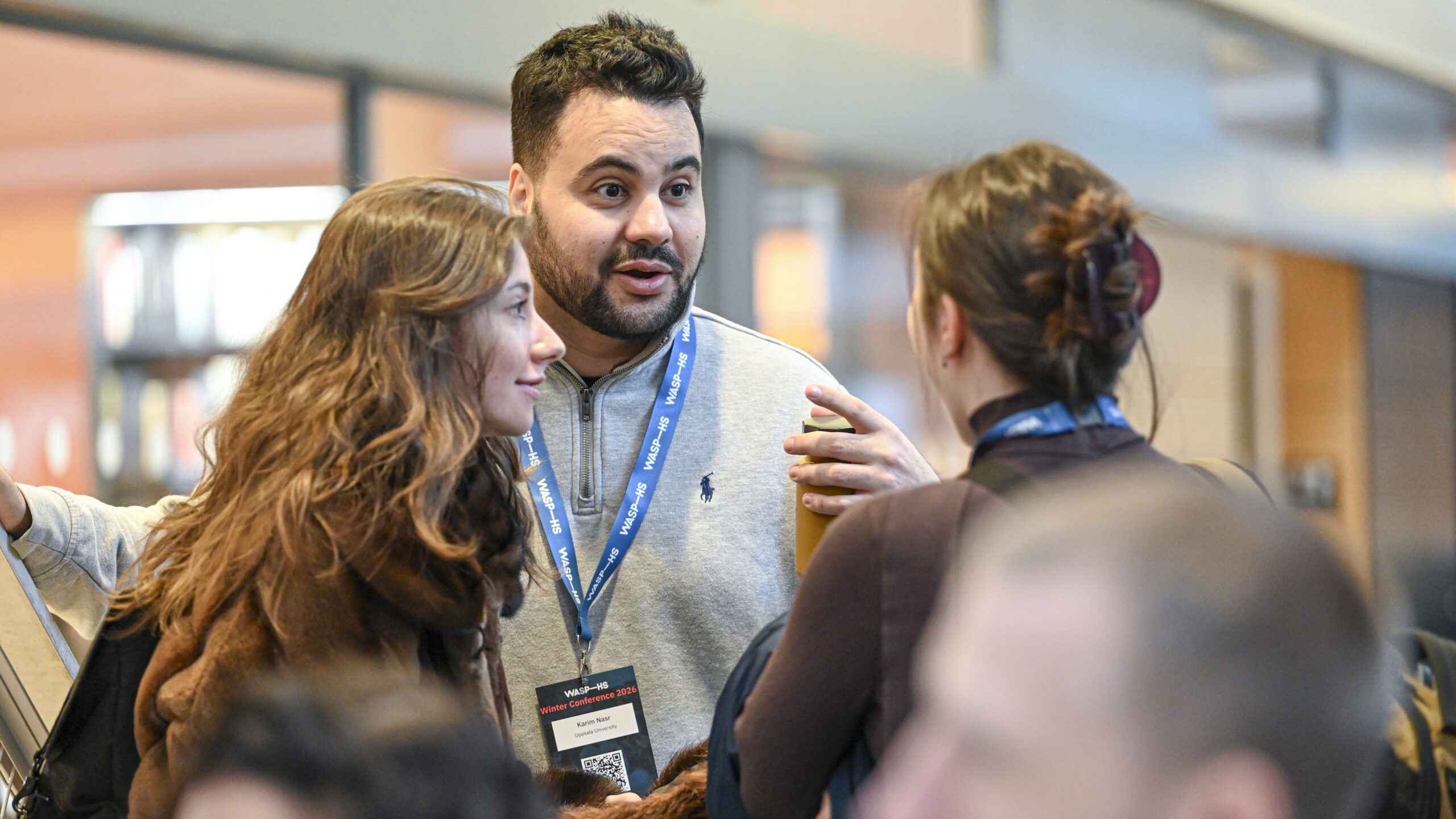
Artificial intelligence (AI) seems to be everywhere: in welfare offices and hospital wards, scientific laboratories and school classrooms, customer service chatbots and administrative documentation systems. Hardly a day goes by without new claims being made about AI’s transformative or disruptive powers, accompanied by promises of efficiency, insight, and radical institutional change. In this workshop, WASP-HS together with CAISA, will examine the hype, practices, and politics of “AI” in the context of Nordic societies.
With highly digitalized societies and citizens, digital public sectors, extensive population registers, and long traditions of automation and data-driven governance, Nordic societies have lived with digital and automated systems for decades. Yet AI appears to extend these dynamics by entering the communicative and epistemic core of institutions: analyzing, classifying, writing, advising, summarizing, and interacting across knowledge making practices, from the lab to the welfare office. Following this, we would like to discuss how AI systems reshape knowledge practices and institutions, and what the implications might be for how we theorize AI in society.
Workshop Themes
New Objects of Knowledge
Emerging AI infrastructures do not only detect patterns in data. They also produce new objects of knowledge and intervention through texts, summaries, explanations, simulations, and other outputs. In scientific and institutional settings, these systems can shape the very objects and descriptions through which the world is understood. This raises broader questions about what AI brings into being in data-intensive Nordic societies.
Classification and Valuation
When computational systems enter knowledge-making and institutional practice, the boundaries of categories begin to shift. People, groups, and objects may be ranked, scored, grouped, and made visible in new ways, creating new hierarchies and forms of valuation. By producing classifications, recommendations, summaries, and evaluations in natural language, these systems may further stabilize and intensify such processes. The workshop therefore asks how AI reshapes both what is classified and valued, and how this is done.
Knowledge Practices and Institutions
As AI becomes embedded across organizations and institutions, it changes how knowledge is produced, validated, and circulated. Systems that analyze data, draft reports, respond to citizens, or assist professional reasoning affect how expertise is organized and articulated in practice. In this way, AI enters the communicative and epistemic core of institutions rather than remaining a peripheral technical tool. This opens up broader questions about how societies come to know themselves and the world through computational infrastructures.
Workshop Focus
Drawing on Science and Technology Studies and Organization Studies, this workshop brings together researchers across the Nordic countries to examine what predictive and generative AI are actually doing to institutions, knowledge practices, professional work, state–citizen relations, and collective futures. We are particularly interested in empirically grounded work dealing with knowledge making practices in diverse domains. Empirical examples may include policing, welfare services, healthcare, education, and science. Rather than treating AI as a stable or finished technological object, the workshop asks how these systems are enacted in practice and what this implies for how we can theorize AI in society.
Organizers and Contact
Please contact the organizers if you are interested in participating.
Prof. Francis Lee, Södertorn University
francis@francislee.org
Prof. Helene Friis Ratner, Technical University of Denmark
hfrra@dtu.dk
Funded by WASP-HS, Algorithms, Data & Democracy Project (ADD) – VELUX Foundations.