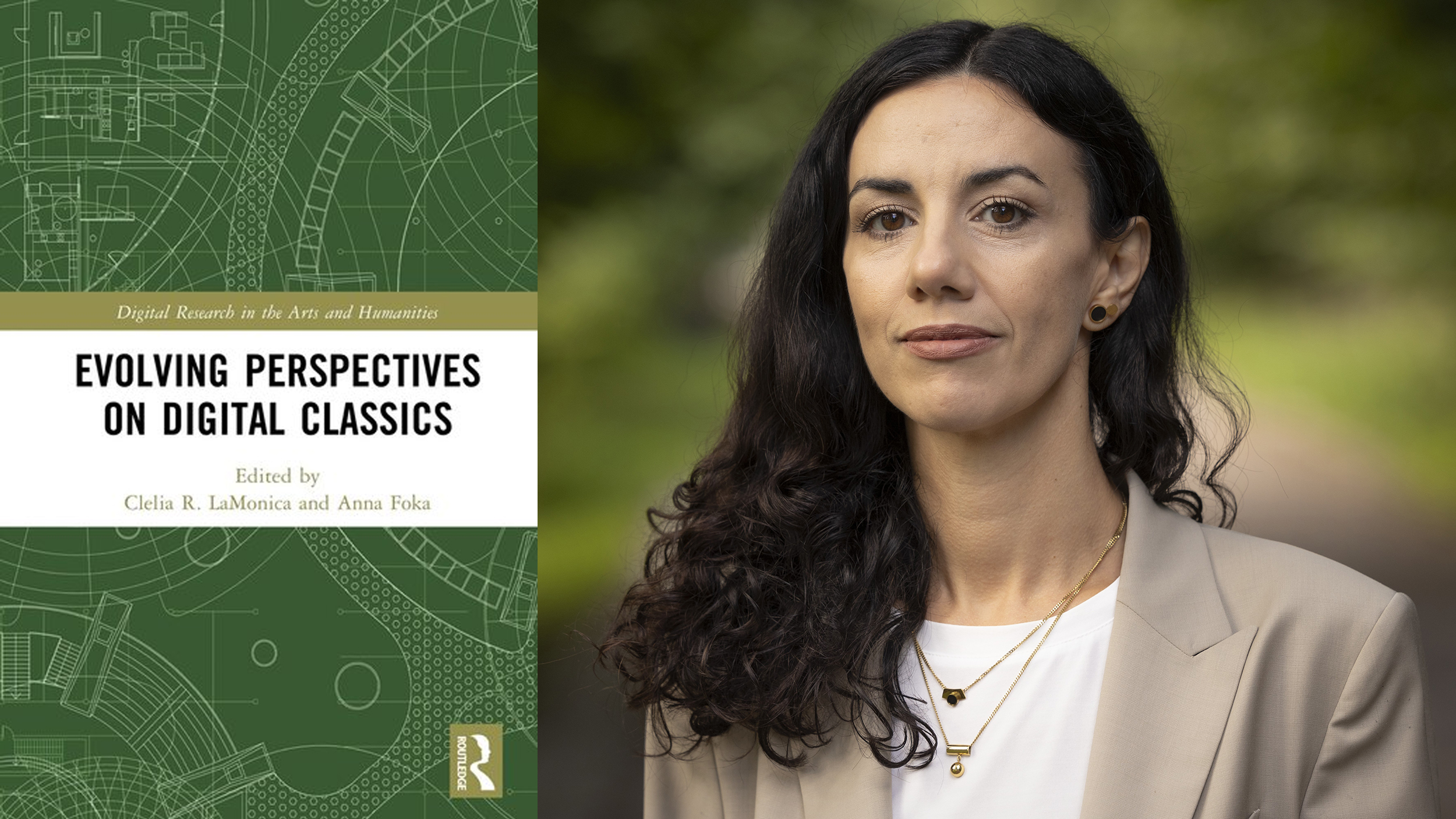
Artificial intelligence (AI) does not just shape our lives today — the technology also changes how we study, interpret and communicate the past. In the new book Evolving Perspectives of Digital Classics, Anna Foka, Professor of Digital Humanities at Uppsala University, shows that AI is more than a tool. It challenges us to rethink what counts as evidence and how we interpret and present ancient texts, places, and objects.
“The stories we tell of ancient worlds shape the way we understand them. Digital and AI based tools change the way we see previous evidence of the past” says Anna Foka Professor of Digital Humanities at Uppsala University.
In their edited volume Evolving Perspectives of Digital Classics, Clelia LaMonica and Anna Foka argue that AI models can change what researchers count as evidence of the past.
AI-based tools do not just speed up research; they change the scale and kind of evidence that can be worked with. When texts, images, and ancient locations are turned into structured, machine-readable data, they can be traced as patterns that are almost impossible to grasp through close reading alone. From how people appear across scattered inscriptions to how emotions and bias are expressed in Greek and Latin literature, AI tools can be used to get a better overview and connect more dots than before.
“In the book we show how annotation platforms, linked open data, geographic information systems and AI models open up new questions about power, movement, and representation in the ancient world, while still depending on the critical judgment of humanists,” says Anna.
AI Futures of Culture and Memory
“This links directly to our WASP-HS Research Environment, where we study how AI reshapes culture, creativity, and power: who gets to interpret the past, how memory is stored and shared, and how these new tools can reveal a more complex, richer picture of antiquity that deepens our understanding of humanity and society today,” adds Anna.
Anna Foka is the research leader of the WASP-HS Research Environment AI Futures of Culture and Memory.
Read more about AI Futures of Culture and Memory.
Available Now
Evolving Perspectives of Digital Classics is available now online.