

This website uses cookies so that we can provide you with the best user experience possible. Cookie information is stored in your browser and performs functions such as recognising you when you return to our website and helping our team to understand which sections of the website you find most interesting and useful.

AI for Humanity and Society 2026
November 10 @ 12:00 - November 11 @ 12:15
Robots and Autonomous Systems in Everyday Life
How can we live amidst and with robots? How do they impact human work and our understanding of social relationships and societal values? Complex organizational work is needed to make robot fleets run smoothly and bring forward societal concerns about care, safety and responsibility. Join the WASP-HS conference AI for Humanity and Society 2026 themed “Robots and Autonomous Systems in Everyday Life”.
Robots and autonomous systems have left the laboratories and are now entering homes, schools, hospitals and public spaces. They are becoming part of everyday life. Being a material and mobile manifestation of artificial intelligence, robots raise new questions about autonomy and agency in relationships with individuals.
This year’s conference, Robots and Autonomous Systems in Everyday Life, will explore how individuals, organizations, and societies are impacted when robots enter our daily life, shedding light on how humans work to make autonomous systems at home in the world. WASP-HS welcomes researchers, industry leaders, policymakers, and civil society to come together to make sense of emerging developments and to discuss agendas for humane futures with autonomous systems and AI. Through panels, keynotes and an interactive reception, we will engage with topics such as coordination and interaction with robots as a form of embodied AI, robots in education, regulatory and policy issues related to autonomous systems, as well as the roles robots and autonomous systems may play in care and crisis.
The WASP-HS AI for Humanity and Society 2026 conference fosters human-centered perspectives on robots and autonomous systems, offering a space to examine emerging challenges and to jointly imagine possible futures — where robots and autonomous systems can foster human relationships, contribute to inclusive public spaces, and stimulate meaningful work. We warmly welcome you to join us in Linköping at Mjärdevi Science Park (Teknikringen 7) on 10–11 November, 2026.
Keynotes
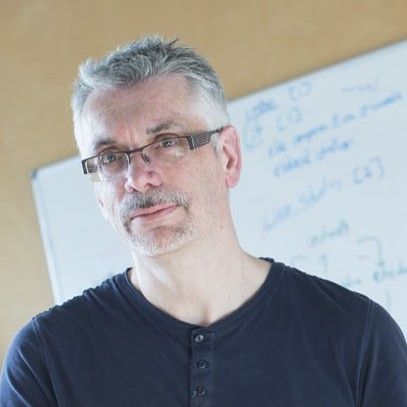
Steve Benford
Dunford Professor of Computer Science, University of Nottingham And UKRI Turing AI World Leading Research Fellow
Somabotics: Creatively Embodying Artificial Intelligence
Somabotics is a research programme exploring how artist-led methods can provoke and improvise AI and robotics research. We believe that the purpose of AI, including its embodiment in robots, is to enable humans to make meaning of the world, of themselves, and of technology too. Meaning emerges from reflection on experiences, especially aesthetic and embodied ones. I will reflect on how recent artistic projects involving robots – from playing with Cats, to dancing and unusual embracing – provoke new insights into human-robot interaction. I will highlight the idea of ‘responsible irresponsibility’ through which artists confront wider ethical challenges.

Janet Vertesi
Associate Professor, Princeton University and Associate Director of the Keller Center for Innovation in Engineering Education
Ten Provocations for the Study and Construction of Human-Robot Teams
In this talk, I draw on two decades’ worth of ethnographic work with NASA’s most successful robotic space missions in the early 21st century to present provocations for how we develop human-robot and human-AI teams in the future. NASA’s teams work with advanced systems on other planets, yet their position in a public scientific enterprise troubles many taken-for granted assumptions we think we understand about humans, robots, and autonomous systems. Taking a social scientific lens to study how interdisciplinary human teams working with robotic intelligences at tremendous distance, I invite the audience to think differently about autonomy and innovation by describing which features of human-machine partnership are essential, which are contingent, and which could be built better otherwise.
Preliminary Conference Program
Tuesday, 10 November
12:00 Registration opens
13:00–13:15 Welcome and introduction
13:15–14:00 Panel 1: Coordinating Human and Robot Bodies
Moderator: Valentina Fantasia, Lund University
Emily Hofstetter, Linköping University
Juliene Madureira Ferreira, Tampere University
Madeline Balaam, KTH Royal Institute of Technology
14:15–15:00 Panel 2: Educational Robots and AI
Moderator: Ali Reza Majlesi, Karolinska Institutet
Ginevra Castellano, Uppsala University
Linnéa Stenliden, Linköping University
Sofia Serholt, University of Gothenburg
15:00–15:30 Coffee Break
15:30–16:15 Opening Keynote
Steve Benford, University of Nottingham And UKRI Turing AI World Leading Research Fellow
16:30–18:30 Interactive Reception
Participants are welcome to explore live demonstrations where researchers and partners showcase robots, prototypes, and concepts. Attendees experience robots and engage with WASP-HS research in a hands‑on setting.
Wednesday, 11 November
08:30 Registration opens
09:00–09:15 Welcome and Opening
09:15–10:00 Panel 3: Policy and Regulation of Robots
Moderator: Stefan Larsson, Lund University
Cilli Sobiech, Swedish National Road and Transport Research Institute
Barry Brown, University of Copenhagen & Stockholm University
Eduard Fosch-Villaronga, Leiden University
Martin Ebers, WASP-HS Guest Professor, Örebro University
10:00–10:15 Coffee Break
10:30–11.15 Panel 4: Robots and AI in Care and Crisis
Moderator: Helena Lindgren, Umeå University
Jessica Lindblom, Uppsala University
Jesper Tordenlid, Cloudberry Systems AB
11:15–12:00 Closing Keynote
Janet Vertesi, Princeton University and Associate Director of the Keller Center for Innovation in Engineering Education
12:00–12:15 Closing and announcement of 2027 conference
Registration
Registration opens 8 September and closes 22 October.
Panel Abstracts
Panel 1: Coordinating Human and Robot Bodies
Uniting perspectives from interaction studies, embodied and enactivist cognition as well as feminist design, this panel introduces robots as a type of AI that deserves particular attention. How can we think about robots, the body, touch and movement?
Panel 2: Educational Robots and AI
Educational robots are increasingly entering learning environments as tutors, tutees, companions and mediators of participation. This panel brings together perspectives from robotics and educational research to examine what robots and AI can contribute to learning, interaction and inclusion. We will also critically discuss embodiment, generative AI, children’s agency and trust, as well as the ethical responsibilities involved in designing and using socially interactive technologies in education.
Panel 3: Policy and Regulation of Robots
Robots entering streets, worklives and homes raise new questions from policy, regulatory and legal perspectives. How do we want to live with increasingly autonomous, mobile and embodied technology in our societies? How can we be attentive to unwanted effects, and enable fair, responsible and fittingly governed robotics and human-robot interaction?
Panel 4: Robots and AI in Care and Crisis
This panel explores futures of care and crisis management where robots and AI agents are supporting humans and teams as autonomous or semi-autonomous collaborators performing tasks in challenging situations. What role can AI machines take in emergencies and how could collaboration among humans and AI-agents and robots be developed and coordinated?
Conference Chairs

Hannah Pelikan
Assistant Professor at Linköping University and a Pro Futura Scientia Fellow at the Swedish Collegium for Advanced Study.

Airi Lampinen
Associate Professor in Human–Computer Interaction at the Department of Computer and Systems Sciences at Stockholm University.